
Locating Fey Mou(s): The Topos of Chinese Film Theory by Victor Fan, 26 March, 6-8pm

Location: 50 George Square, Project Room (1.06), University of Edinburgh

A screening of Spring in a Small Town (dir. Fey Mou, 1948) is held on Monday, 25 Mar, 4-5:30 pm at David Hume Tower, LG. 06

Chinese film theory and criticism are often considered being radically different from their Euro-American counterparts. Yet, during the Republic period (1911–49), under colonialism and semicolonialism, Chinese filmmakers, critics, and intellectuals discussed the cinema with a vocabulary and an epistemic space that are already cross-cultural and inter-regional. In other words, ‘Chinese’ film theory has always been a comparative discursive space.

Yet, how do we reconstruct and rethink this comparative space so that we can make it useful for film and media studies today? In my seminar, I would like to use the theories of Fei Mu (Fey Mou, 1906–51) as a case study. Fey is best remembered for his 1946 classic Xiaocheng zhi chun (Spring in a Small Town, Wen Hwa Film Company). This film is about the unrequited love between a young doctor, Zhang Zhichen (Li Wei), and his former lover Zhou Yuwen (Wei Wei) now the wife of his best friend, Dai Liyan (Shi Yu). What could have been a melodrama was shot and edited in a highly lyrical style, with a series of long takes, elegant camera movements, and deep staging. Yet many people today forget that Fey was also a prolific writer of film criticism. In this presentation, I analyse Fey’s film theory in association with Spring in a Small Town, to examine how for him, cinema conveys a xingshi guan (view of forms), rensheng guan (view of life), and zhengzhi guan (view of politics). I shall do so by opening a comparative space between his theoretical writings and those of David Bordwell, Kristen Thompson, Christian Metz, and André Bazin on the relationship between art and reality. I argue that Fey’s ontological view is based in his belief in cinema’s ability to make present an absence, that is to allow life, its ontological order, and its regulating principles to manifest themselves without preaching them. Rather, they become palpable when the film image reveals the profound mundaneness of life, in which desire, longing, hope, and their attendant frustration and desolation obstinately hover around the cinematographic image as reality.

Victor Fan is Senior Lecturer in Film Studies at King’s College London. He is Film Consultant of Chinese Visual Festival (London). Prior to his position at King’s, he was Assistant Professor at the Department of East Asian Studies, McGill University. Fan graduated with a Ph.D. from the Film Studies Program and the Comparative Literature Department of Yale University, and an MFA in Film and Television Productions at School of Cinema-Television (now School of Cinematic Arts), University of Southern California. He is the author of Cinema Approaching Reality: Locating Chinese Film Theory, published in 2015 by the University of Minnesota Press. His articles have been published in peer-review journals including Asian Cinema, World Picture Journal, Camera Obscura, Journal of Chinese Cinemas, Screen, Film History: An International Journal, CLCWeb: Comparative Literature and Culture, anthologies A Companion to Rainer Werner Fassbinder and American and Chinese-Language Cinemas, film magazines 24 Images: Cinéma, Dianying yishu [Film Art], Zihua [Zifaa or Word blossoms], and Siyi.  His film The Well was an official selection of the São Paolo International Film Festival; it was also screened at the Anthology Film Archives, the Japan Society and the George Eastman House.

Besides his academic career, Fan is also a working composer. He was a performance artist with his own theatre company Post [ET]2! in Hong Kong between 1993 and 1996. He also worked as a freelance sound editor, film composer and re-recording mixer, and later on with Fissionarts (Los Angeles) and Solar Film/Video Productions (NYC) between the late 1990s and the mid 2000s. In New York, he also wrote for the magazines Film Festival Reporter and Film Festival Today, covering news from the MIX Festival, the New York Underground Film Festival, the African Diaspora Film Festival and MOXIE Film.
Chinese Language Classes Holiday This Week

Happy Spring Festival to all our students and friends!  Due to the Chinese New Year holiday (New Year’s Day is February 5), no evening classes will be held at the Confucius Institute for Scotland this week.  They will resume again as normal on February 11. 新年快乐!吉祥如意!We will be holding our annual party on February 8 from 6pm-9pm. Please sign up at:  https://edin.ac/2FSWKmT

Chinese New Year Events for All

chinese new year

Join the Confucius Institute for Scotland team at some fabulous Chinese New Year events to celebrate the Year of the Pig which starts on February 5.   The Chinese New Year is also known as the Spring Festival.

January 24 6.30pm: China-Britain Business Council Chinese Burns Supper at the Waldorf Astoria. This was an evening blending the best of Chinese and Scottish culture in celebration of Robert Burns.  We sponsored an amazing line up of entertainment including the acclaimed Katie Targett-Adams who sings in Mandarin and English and plays the harp.  We flew Katie to Edinburgh specially for the event.  We

February 2 9am to 2pm: The Confucius Institute for Scotland stall at the Farmer’s Market, Castle Terrace, Edinburgh – special activities for kids and adults.  Our Chinese teachers and staff  entertained visitors with a range of fun and intriguing cultural activities.  Visitors discovered their animal year and some lucky people won great prizes.

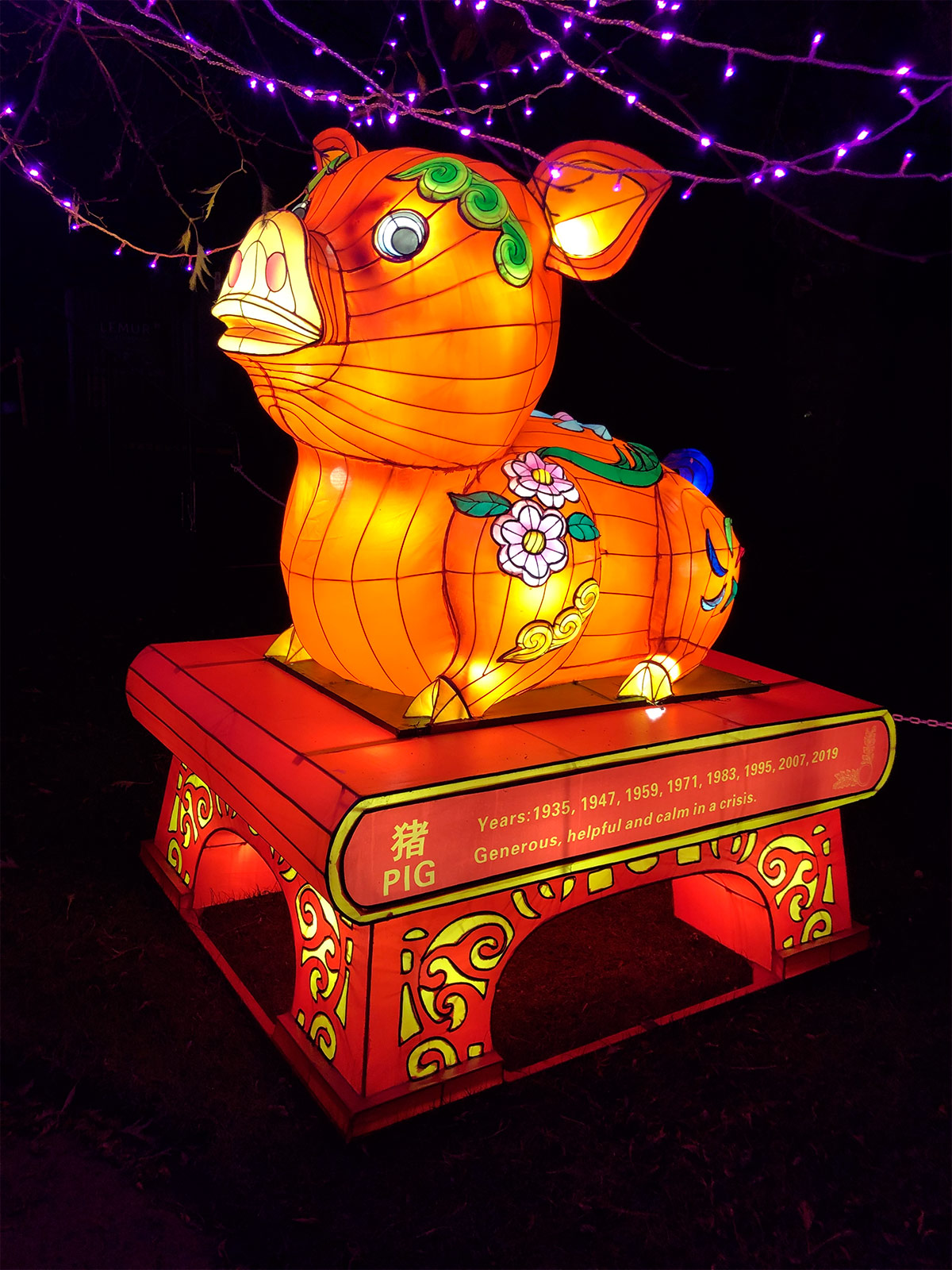
February 5 6pm: Come to Edinburgh Zoo – find us at the Creative Cabin for a night to remember – lots of wonderful Chinese cultural activities set amongst the stunning Great Lanterns of China.  Bring your sense of fun and curiosity to enjoy our much sought-after cultural experience and take home your creations.   The Confucius Institute for Scotland is sponsoring the Great Lanterns of China featuring vibrant lanterns of Chinese and Scottish mythical creatures and animals protected by conservation.  This lantern festival has been running since November and will end on February 17 – book your tickets at: https://www.edinburghzoo.org.uk/lanterns

February 8 6pm: Join the Confucius Institute for Scotland’s annual Spring Festival party to mark the arrival of the Year of the Pig. Meet up with friends old and new over some delicious jiaozi and a glass or two, and take part in cultural activities including mah-jong, calligraphy, karaoke and Chinese chess.  Please register to ensure your entrance and to allow us the chance to provide enough Chinese dumplings! Book your ticket now at:  https://edin.ac/2FSWKmT

February 15 6pm-7.30pm: Confucius Institute for Scotland Chinese New Year Reception at Edinburgh Zoo. A celebration to mark the arrival of the Year of the Pig including welcome speeches by Consul General Pan Xinchun of the People’s Republic of China, Frank Ross, the Lord Provost of the City of Edinburgh, Peter Mathieson, Principal and Vice Chancellor of the University of Edinburgh and Natascha Gentz, Director of our Institute and Assistant Principal (China), the University of Edinburgh.  Enjoy the festivities and gorgeous lanterns on display.  Places at this event are limited and booking is essential.  Participants must present the booking details at the event.

See our links below: Our Chinese language teachers and staff share their personal insights into the delights and mysteries of Chinese New Year, including food, feasts (and a crash course in cooking Chinese dumplings), traditions and myths and how to send greetings of luck.  Many of our teachers will be spending their first Spring Festival outside China so their stories come with extra warmth.

Confucius Institute for Scotland – Edinburgh Zoo’s Giant Lanterns of China Festival

Preparation of the Chinese New Year

Taboos During Chinese New Year

Chinese New Year’s Family Reunion Dinner – A Delicious Feast

How to Make Chinese Dumplings – A Crash Course

The Legend of the Beast Nian – Origins of Chinese New Year

Spreading Luck at Chinese New Year

Fortune God, Kitchen God, Door God – Gods at Chinese New Year

Six Week Evening Chinese Calligraphy Class – Running style from 26 February 2019

Discover the ancient art of calligraphy using the traditional Chinese brush and ink combination that has been in use for thousands of years.

The six week course runs from Tuesday evening 26 February to 2 April, and will be led by Chi Zhang, the Institute’s experienced calligraphy teacher. Students will be introduced to the materials of ink, brush, stone and paper, and initially common techniques will be introduced.

Burns Supper Red Red Rose

This six week course will start by introducing common techniques related to the Chinese soft brushes and ink. The course will focus on Running Style (Semi-cursive). Students will start to learn the basic strokes of running style. Running style also called semi-cursive script; this is a more flowing style in which strokes are allowed to run into each other.

Students can anticipate completing at least one piece of Chinese calligraphy artwork per class. The contents of this work could be a selected Chinese poems or perhaps an ancient master’s quotation. Demonstration and plenty of personal attention will be provided during the class.

With a maximum of 12 students in the class plenty of personal attention is guaranteed as well as clear demonstrations and instructions to help students develop their skills.  Both beginners and advanced students are welcome in the class.

The cost is £120 for the 12 hour course which runs Tuesday evenings from 6pm – 8pm from 26 February 2019. There is a concession rate of £100, which is offered only to full time students.  The fee includes all materials. A minimum of five students are required to ensure the class goes ahead.

To book download this Winter 2019 Six Week Calligraphy Course Form then complete and return it to the Confucius Institute for Scotland with a cheque for the correct amount made out to the University of Edinburgh.

KEY INFORMATION

Course: Six week Chinese Calligraphy – Running and Cursive Style  (Evening)
Date + Time: Tuesdays Evenings – 26 February – 2 April, 6pm-8pm
Cost: £120 (£100) including all materials
Location: Confucius Institute for Scotland Campus, Abden House

You may also be interested in our Brush Painting Class – click here for details.

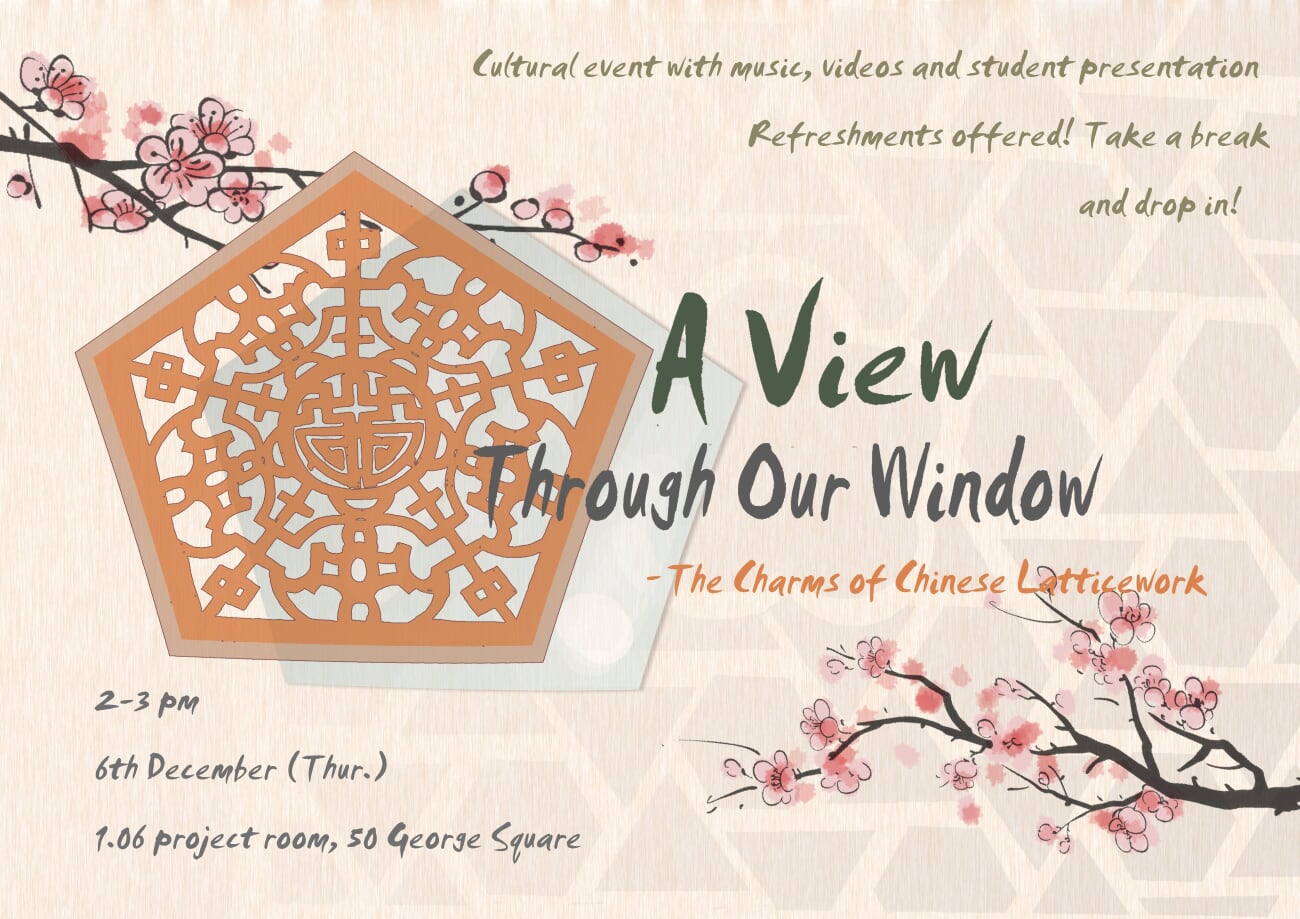
A View Through Our Window – The Charms of Chinese Latticework 6 December 2-3pm

Speak of windows, what kind of image pops into your mind? Transparent and bright? Or stained and classical? Has it ever occurred to you that there are wooden lattices covered by a sheet of paper and intriguing stories behind each and every window pattern? Have you ever thought of windows as works of art rather than tools of ventilation?

Dawn and Emily are visiting students at the University of Edinburgh and they are working on a project on Chinese latticework. They would love to share their stories and listen to yours! Join their event on 6 December at 2-3pm in Project Room, 50 George Square.

Grab a totally different idea of windows and lattices as well as a cup of tea and some light refreshments (including dim sum, vegan options provided).

Music and videos will also cheer you up during the cold winter day and stressful finals!

All Welcome! Booking is required. Reserve your place here: https://edin.ac/2FN24to

A View Through Our Window

THE CHINESE IN BRITAIN – A HISTORY OF VISITORS AND SETTLERS By Barclay Price

Today over 400,000 Chinese live in Britain, many more attend British universities, and an increasing number visit Britain on business and as tourists. But until now, there has been no comprehensive history of the Chinese who came to the country. This book tells that story, from the first recorded visitor in 1687 through to the twentieth century, drawing on accounts by visiting Chinese, newspaper articles, memoirs, royal diaries and other contemporary sources.

The book encompasses, among much else, the sailors who worked on British ships and briefly lodged in the country between voyages; the emergence of Chinatowns in London and Liverpool; servants; students; links to missionaries; Chinese entertainers; exhibitions relating to China; Chinese envoys and ambassadors; and British royalty’s engagement with visiting Chinese. The book also includes extended biographies of some of the most significant Chinese to settle in Britain, including the first such immigrant, who has been overlooked in the historical record.

The author also deals with the suspicion and prejudice that the Chinese have historically experienced due to their different physical appearance, dress and culture. At the same time, he shows the beneficial impacts Chinese visitors have had on British cultural life over three centuries. As China becomes a pre-eminent world power again in the twenty-first century, this book uncovers our long relationship with the country and its people.

If of interest the publisher’s link below offers pre-publication purchase at a discount. The book will be published in January 2019. https://www.amberley-books.com/the-chinese-in-britain.html

Barclay will speak to the The Scotland-China Association Edinburgh Branch on Tuesday 9th April 2019  at 7.30pm in the Meeting House.

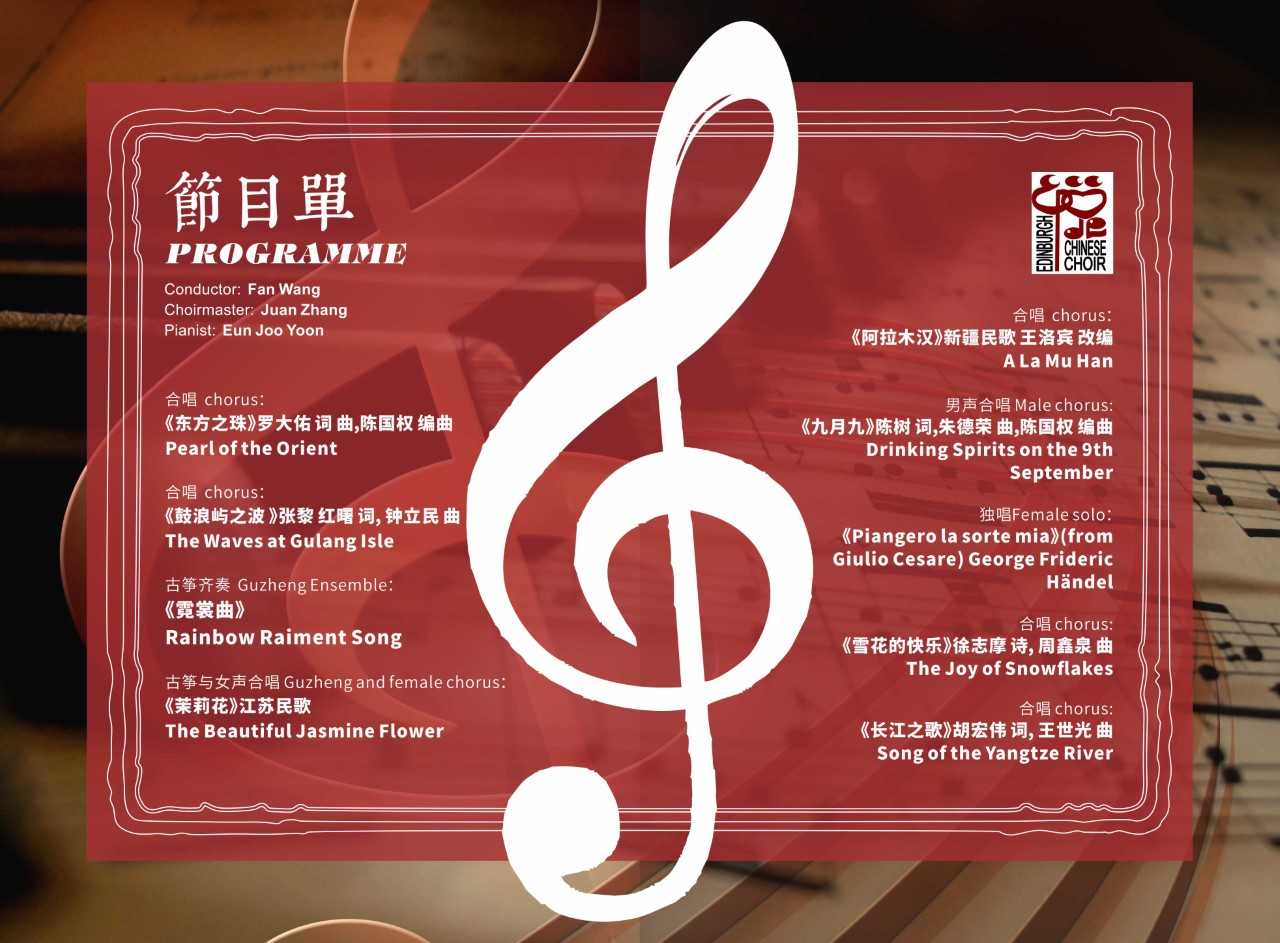
Edinburgh Chinese Choir Concert 2nd December 2018

Edinburgh Chinese Choir (ECC) was formed in 2011 by a group of music loving amateurs. By performing traditional and popular Chinese songs, they aim to add taste of Chinese cultural heritage to Edinburgh’s rich diversity of cultures, and to promote friendship and understanding through music. ECC has performed at Edinburgh Mela in 2012, 2013, and 2014. This year, their concert will take place on Sunday 2 December 2018.

Time: 4:00-5:30pm

Location: Polwarth Parish Church, 36-38 Polwarth Terrace, Edinburgh, EH11 1LU.

Free Entry. Donations welcome.

Website: http://www.ecc2013edinburgh.wixsite.com/ecchoir

Edinburgh Chinese Choir Concert

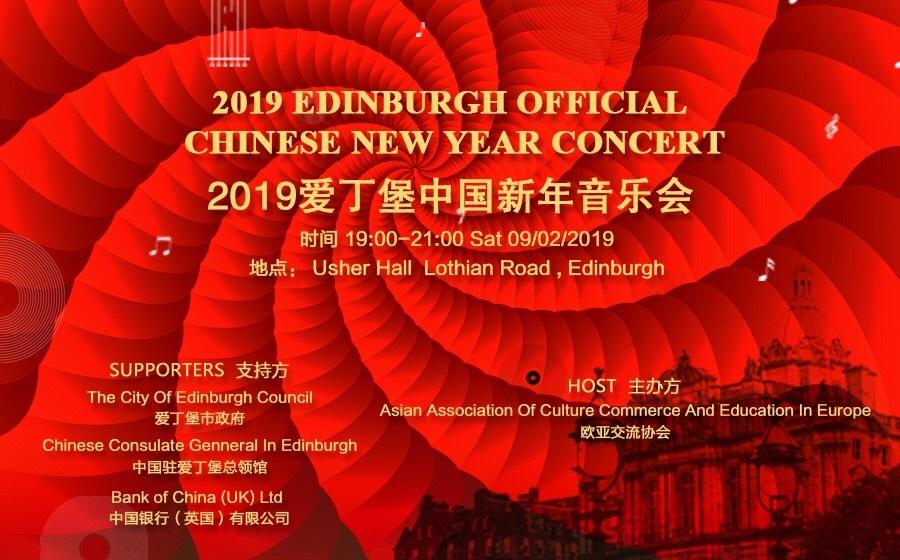
2019 Edinburgh Official Chinese New Year Concert

The Asian Association of Commerce, Culture and Education in Europe (AACCEE) is delighted again to present the 2019 Chinese New Year Concert in the Usher Hall on the 9th of February. The Chinese New Year, known as the Spring Festival in China, will be celebrated on stage by the Edinburgh Symphony Orchestra and some outstanding artists from China.

The concert involves orchestra, singing and dancing from both cultures. The music from the Orient is chosen from well-known and traditional tunes, combined with western classical music, ending with Scotland’s historical and popular melody ‘Auld Lang Syne’. The highlight of the musical performance will be undertaken by performers from both countries, with newly revamped scores and talented artisans.

Also on stage will be a kaleidoscopic splash of color presented by Chinese and Scottish dancers. The cooperation will also involve special choreographed scores played by the Edinburgh Symphony Orchestra and performed by Chinese dancers. The Scottish dancers will do a variety of reels. The whole show will bring audiences a delightful feast of culture in sound and vision.

These are but some of the performances, so sit back and enjoy the concert, witnessing an end to the year of the Dog. Ring out loyalty and honesty, bring in happiness and gentleness from the year of the Pig. Hope we can spread the atmosphere and pleasure of the Chinese New Year Festival throughout the capital city of Scotland, sharing the joy and warmth of the occasion to you all!

Date: 9 February, 2019

Location: Usher Hall, Lothian Road, Edinburgh, EH1 2EA

Doors open: 6pm

Concert: 7pm-9pm.

Price

Early bird tickets (until end of day 6 January): £15 and £10
Standard tickets (from 7 January onwards):  £20 and £15

Tickets will go on sale at 10:00am on Saturday 1 December.  Book your ticket here.

Confucius Institute for Scotland – Edinburgh Zoo’s Giant Lanterns of China Festival

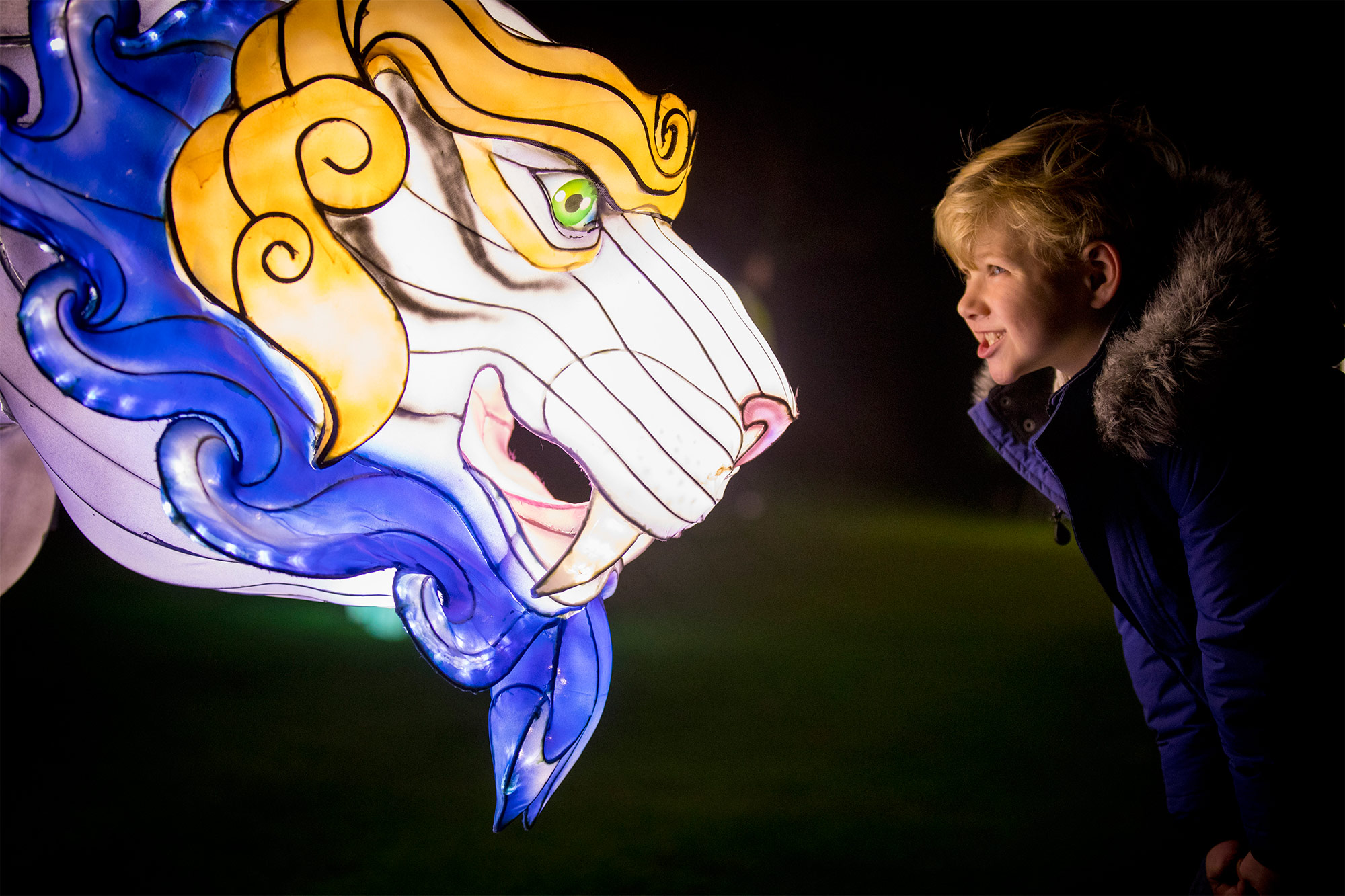
boy with tiger lantern

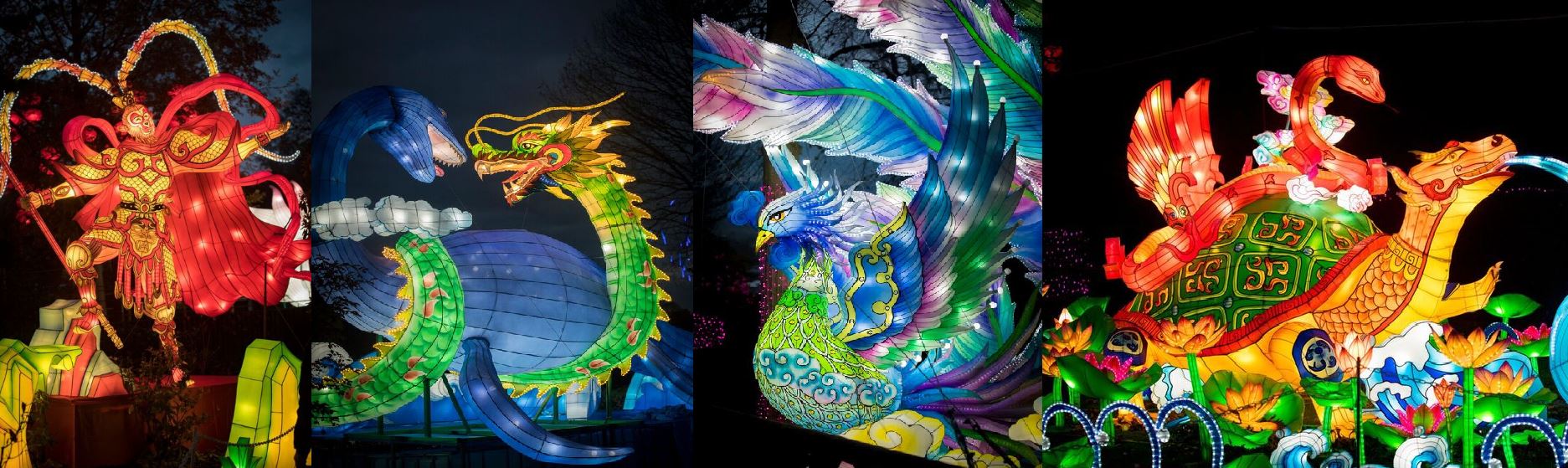
This winter Edinburgh Zoo is alive with the glow of bright, multi-coloured lanterns in the shape of Chinese and Scottish mythical and real creatures.  The Confucius Institute for Scotland is partnering with the Royal Zoological Society of Scotland (RZSS) for this season’s Giant Lanterns of China festival.   It runs on select evenings from November 16 to February 17.  The lanterns are carefully designed and installed by craftsmen from Sichuan province in China. When the Confucius Institute for Scotland supported last year’s lantern festival at the Zoo tens of thousands of visitors were captivated by the display.  This year promises more surprises and delights.   You can scan the QR code on the sign board next to each lantern to get the Chinese version.

Every Tuesday and Thursday throughout the Zoo’s lantern festival period we will post stories related to the Chinese myths and legends as well as other snippets of fun information about Chinese culture.  Check out the gorgeous pictures and memorable stories.

Monkey King 孙悟空

Leaping Carp over the Dragon Gate 鲤鱼跳龙门

Nine-tailed Fox 九尾狐

Four God Beasts 四大神兽

Lady of Flowers 天女散花

Nine Coloured Deer 九色鹿

Chinese Zodiac 十二生肖

Chinese Calendar 中国历法

The 24 Solar Terms 二十四 节气

How is Christmas Celebrated in China?

The Chinese Five Elements 中国五行

Happy New Year – January 1st

1,2,3 – The Legend of Pangu

Preparation of the Chinese New Year

Welcoming Good Fortune at Chinese New Year

The Lucky Carp 支付宝锦鲤

Taboos During Chinese New Year

Chinese New Year’s Family Reunion Dinner – A Delicious Feast

How to Make Chinese Dumplings – A Crash Course

The Legend of the Beast Nian – Origins of Chinese New Year

Spreading Luck at Chinese New Year

Fortune God, Kitchen God, Door God – Gods at Chinese New Year

lanterns

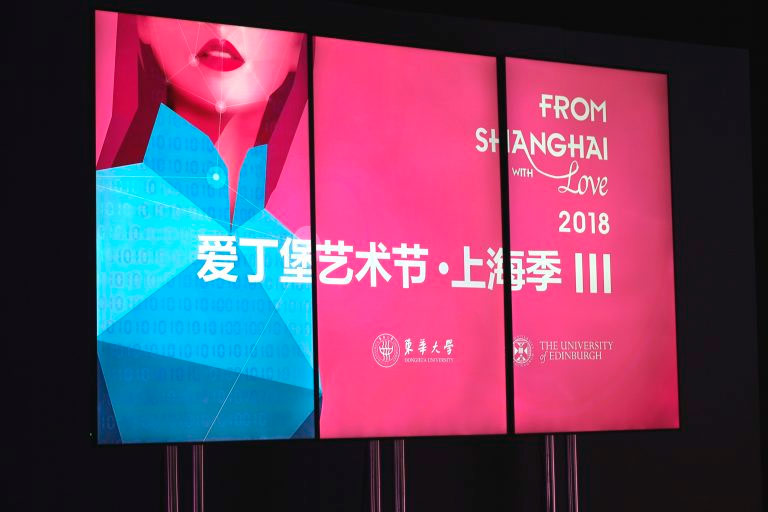
From Shanghai With Love – Fabulous Fashion Show in Edinburgh

shanghai

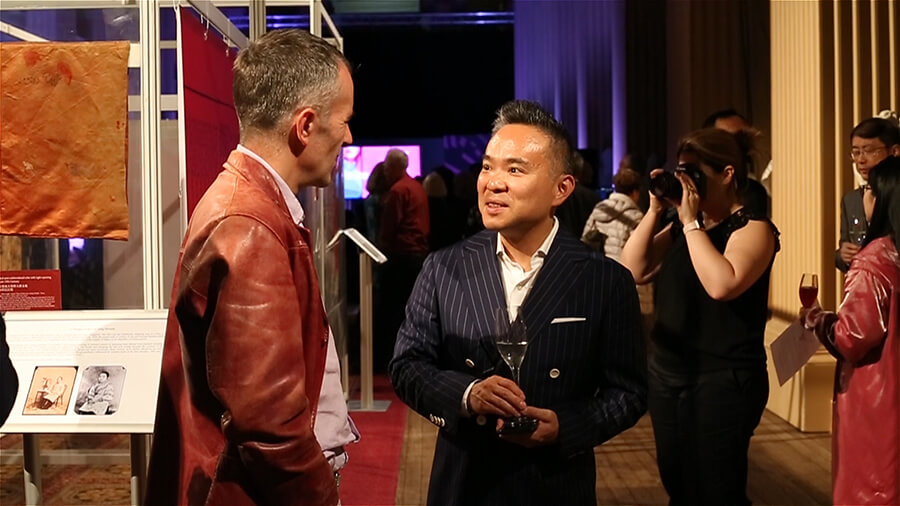
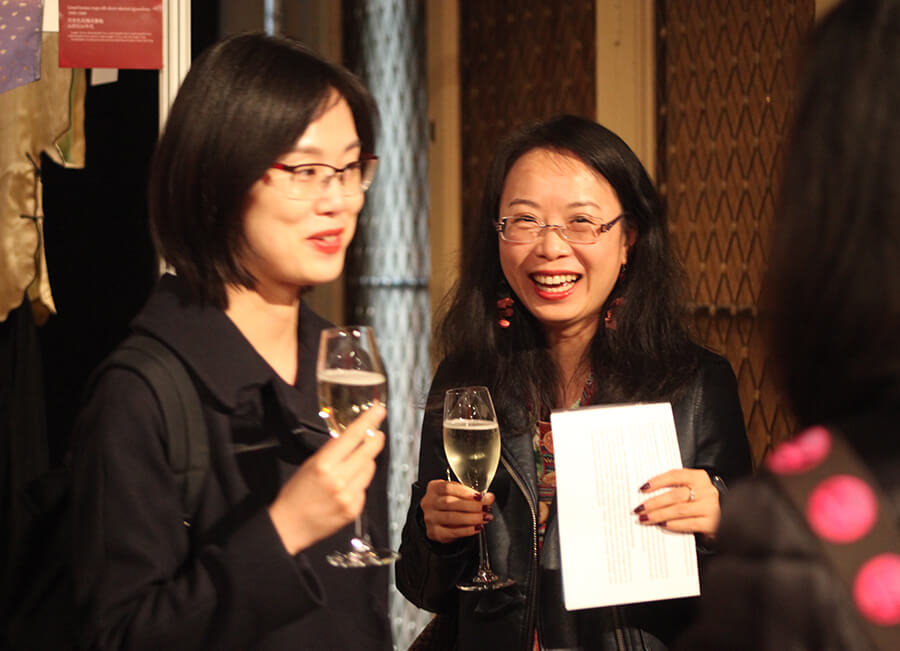
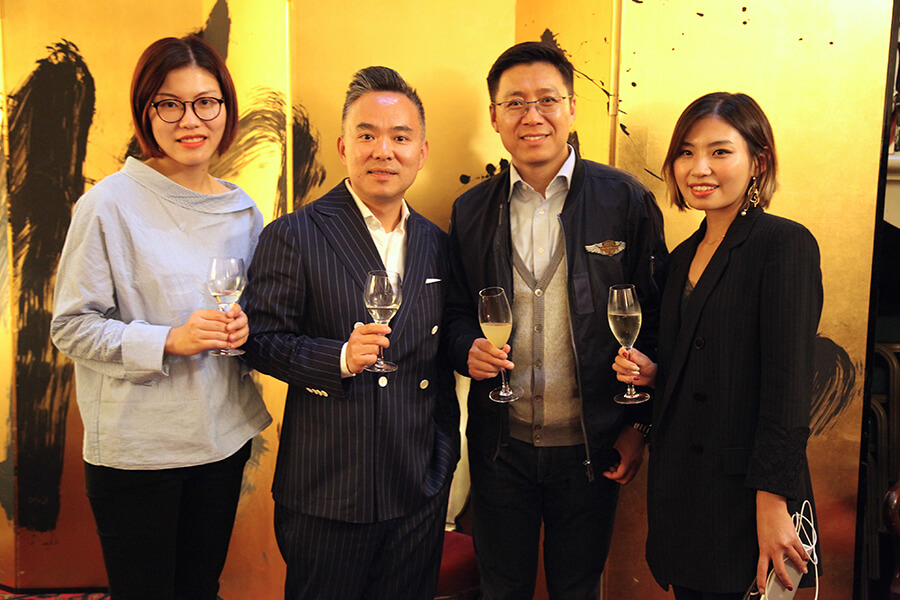
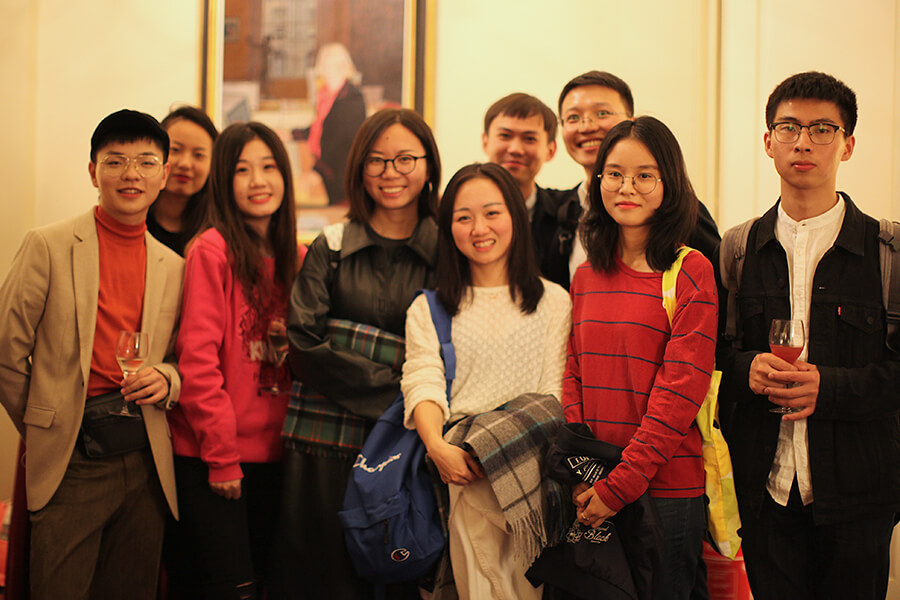
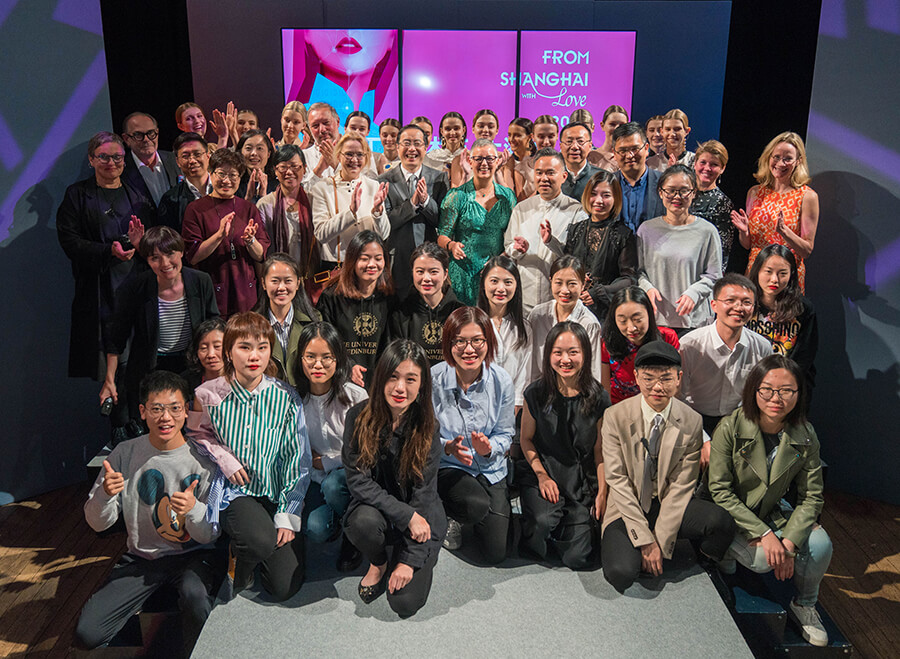
Audiences were captivated by a fantastic display of Chinese Qipao dresses at the sell-out fashion show and exhibition From Shanghai with Love. This was a unique 2018 Edinburgh Festival Fringe event organised by the Donghua Edinburgh Centre for Creative Industries. It is a collaboration between the Shanghai International College of Fashion and Innovation (SCF) at Donghua University and the Confucius Institute for Scotland at the University of Edinburgh.

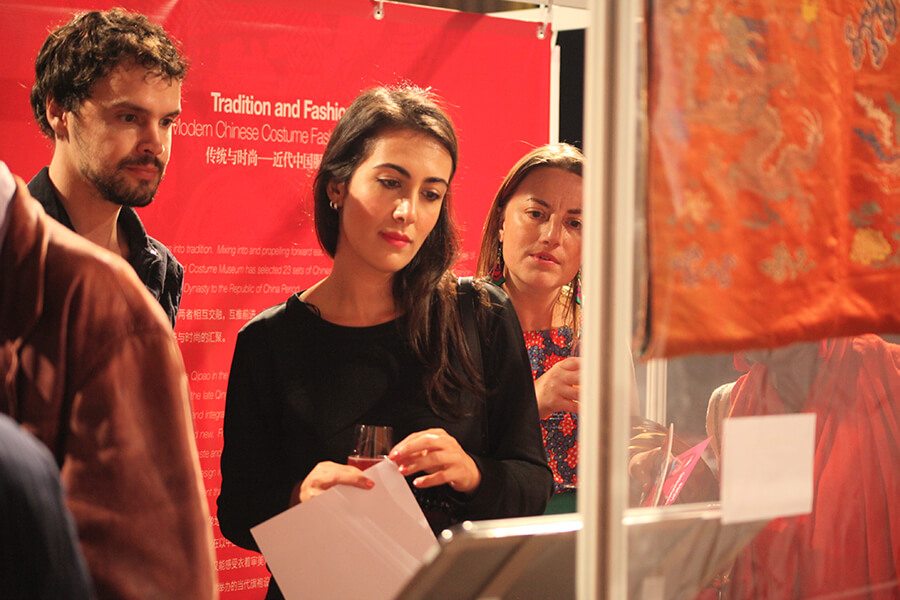
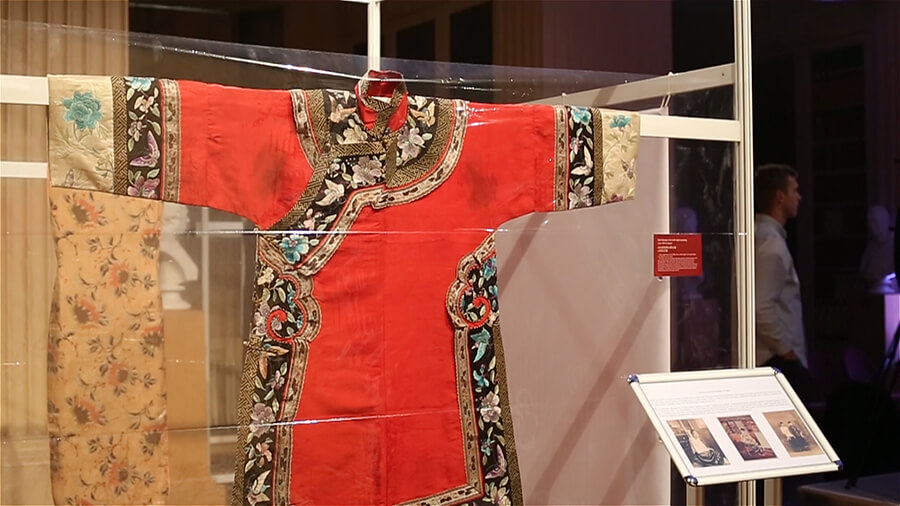
The stunning Playfair Library at the University of Edinburgh provided a magnificent backdrop. Audience members gathered around beautifully preserved traditional Qipao at the exhibition specially curated by the Shanghai Museum of Textile and Costume. The oldest pieces included a brilliant red damask silk embroidered robe and a bold orange satin dragon emblazoned robe from the Late 19th Century. More fitted, contemporary Qipao were from the 1930’s and 1940’s when Shanghai was known as the “Paris of the East”.

shanghai

shanghai


shanghai

shanghai

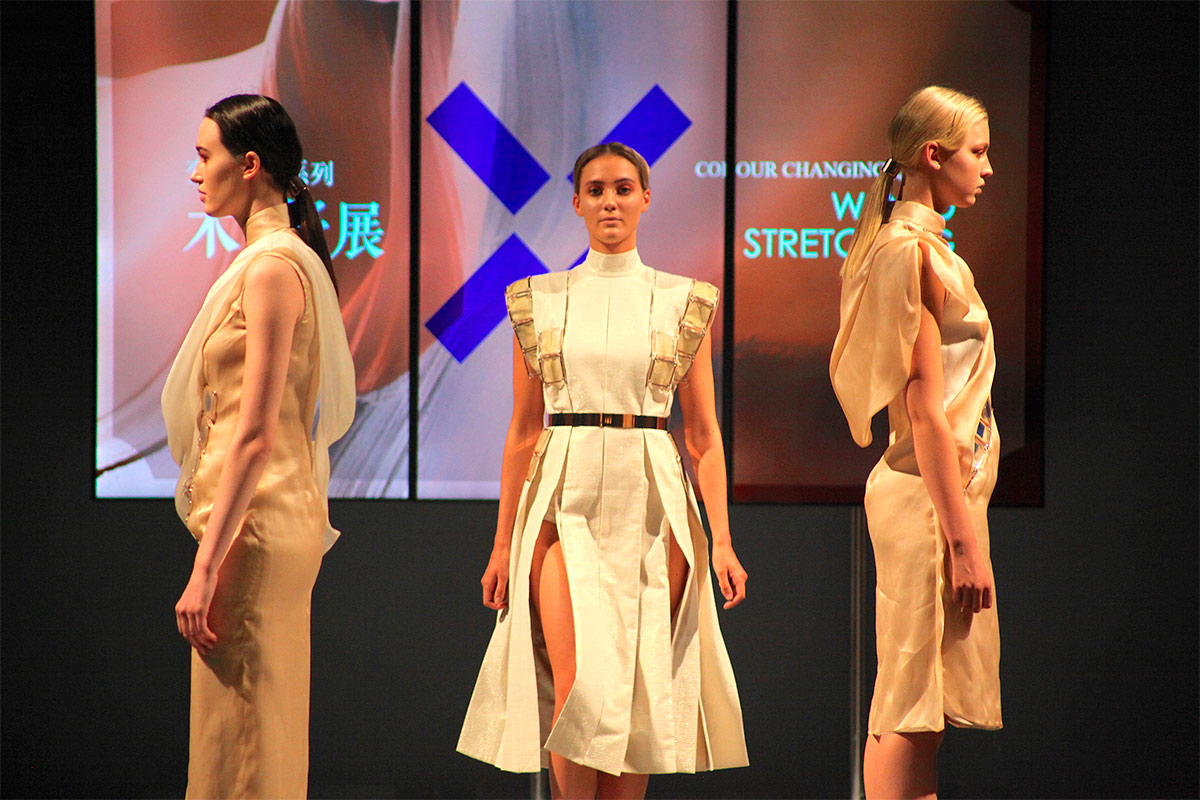
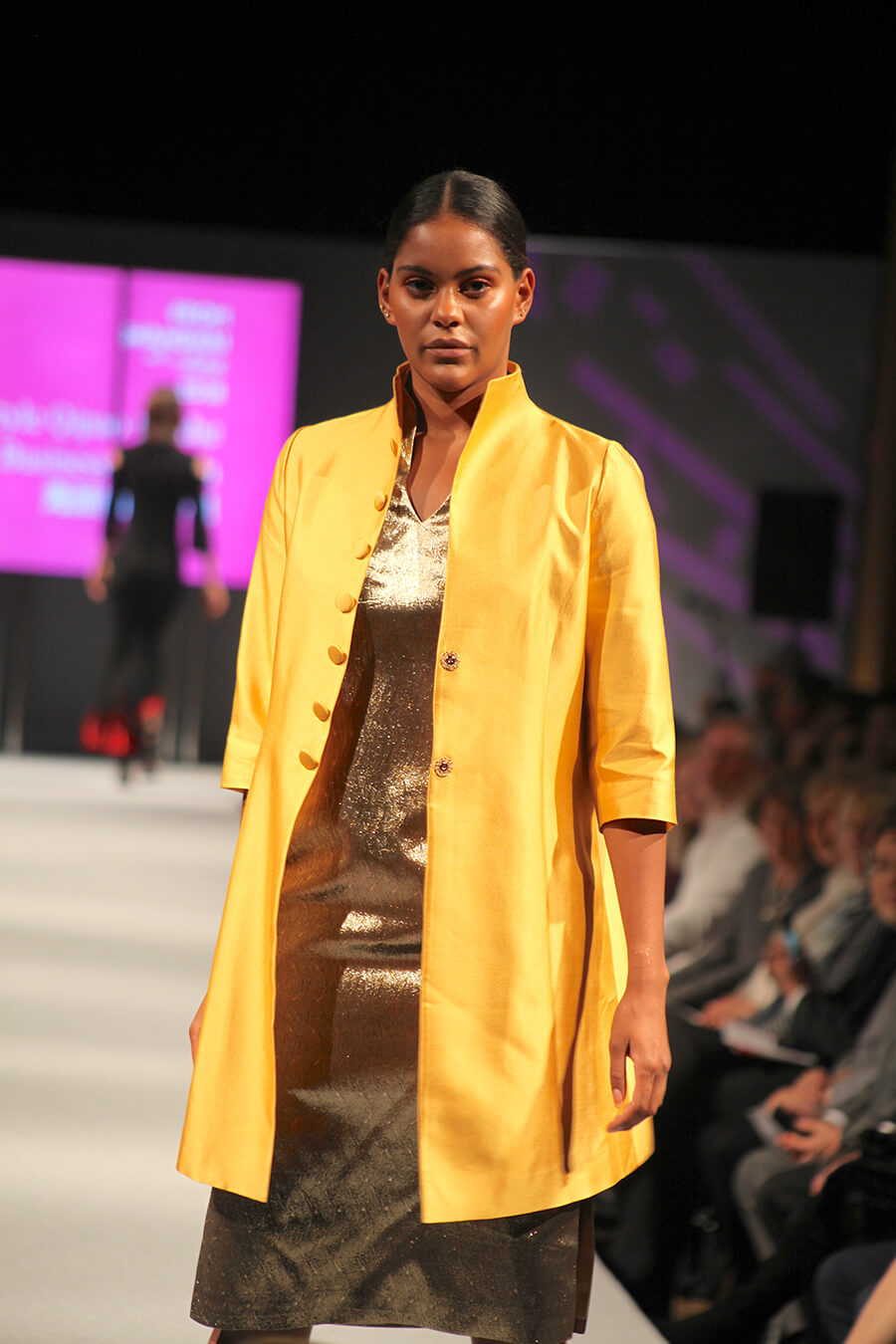
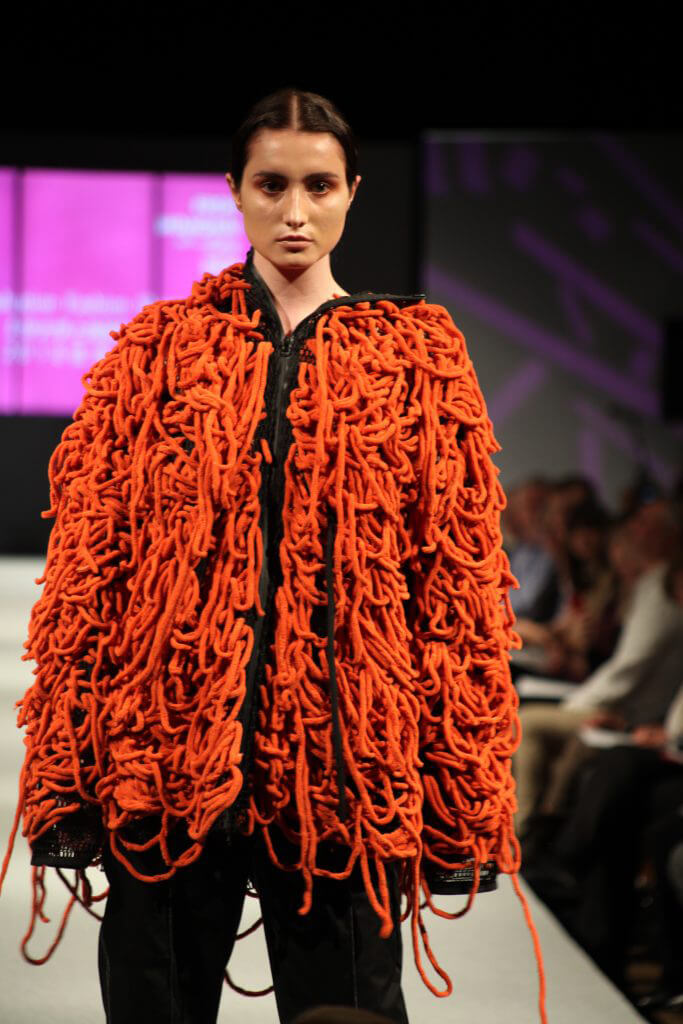
All eyes were on the catwalk as the show began with upbeat music. The first collection was Shanghai style Qipao for the modern business woman – long, elegant cream and gold Qipao. Delicate design details included the traditional Chinese dragon and phoenix. A key theme for the fashion show was the traditional Chinese five elements: Wood, Fire, Earth, Metal and Water. The earth designs were a brilliant yellow, a colour associated with prestige in China. Fabulous fire designs included flames lapping from the bottom of a long, slim dress and red velvety, figure-hugging Qipao with detailed Chinese designs.

shanghai

shanghai

shanghai

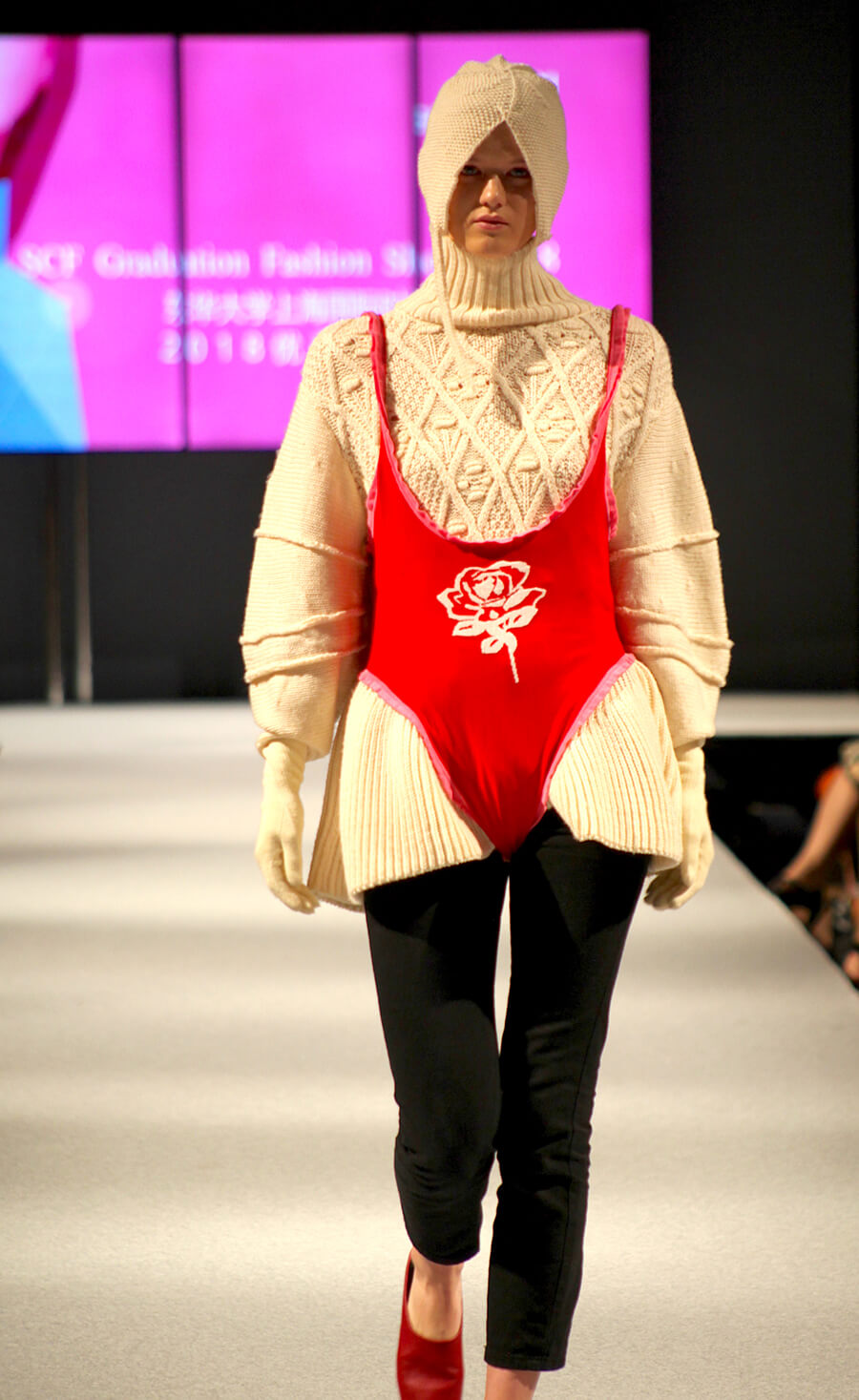
The SCF Graduation Design Show from this year’s bachelor degree graduates showed off wild creativity. A large, exaggerated, chequered trouser suit and a red swimsuit on top of a cream knitted winter outfit made the audience sit up and ponder the extraordinary possibilities of fashion.

shanghai

shanghai

shanghai

Finally we moved to the futuristic designs featuring new technology. Highly wearable silky peach Qipao gowns were accentuated with colour changing panels. The stage darkened as we were taken on a journey to the galaxy of luminous Qipao – flowing, swirling dresses with luminous turquoise, curly wires controlled from a switch in a handbag. Healthcare and fashion blended in designs with inbuilt devices to monitor the temperature and humidity of the wearer’s breasts. The finale was an ensemble of butterfly transforming Qipao. Special colour-changing yarn in the Qipao changed from grey to pink after being heated. The audience was awed.

shanghai

shanghai

shanghai

The students of SCF created their own imaginative interpretations of the Qipao with influence from their Chinese and international teachers. Some of the designs were created in cooperation with SCF’s partners including various Qipao companies. A few of the designs used sustainable, environmentally friendly materials. The College encourages the students to develop creative fashion design using technology, material innovation as well as drawing on cultural heritage.

shanghai

shanghai

shanghai

Thank you to audience members who provided us with excellent feedback.

Photos by Through the Curtains Productions, Creative Team & Models by Colours Agency

Belt & Road Initiative Keynote Lectures and Conference, October 4th and 5th, 2018

confucius logoWe are honoured to host leading scholars from China and Europe at a unique international conference The Belt & Road Initiative: Challenges and Opportunities on October 4th and 5th, 2018. Building on the success of last year’s conference, this year the Confucius Institute for Scotland in the University of Edinburgh is closely cooperating with our partner Fudan University in Shanghai.
We believe this conference will be of great interest to a broad audience as it will be a rare opportunity to hear a range of international insights into the Belt & Road Initiative. The conference has a panel format with topics covering governance, economics, data, culture and education.

We are fortunate to host two distinguished keynote speakers from China:

Keynote Lecture, October 4th 2018, 18.00-19.30 at King Khalid Building, Surgeons’ Hall, Hill Square, EH8 9ST

Wang Wen, Professor and Executive Dean, Chongyang Institute for Financial Studies, Renmin University of China

The “Belt and Road” and the World after 5 years: A Review of Challenges and Successes in the Past and its Prospects for the Future.

His lecture will be a review of the challenges and successes over the past 5 years of the Belt and Road Initiative and prospects for the future.

Professor Wang holds a number of senior positions including Consultant Fellow at the Counselors’ Office of the State Council of China and Standing Director of World Socialism Research at the Chinese Academy of Social Sciences.  He has published widely on international issues including a book entitled Green Finance for the Belt and Road Initiative.

To receive your complimentary ticket for the Wang Wen keynote, please register by October 1st at:

https://edin.ac/2pquRZy

Keynote Lecture, October 5th 2018, 18.00-19.00 at Edinburgh Centre for Carbon Innovation (ECCI), 1/9 High School Yards, Infirmary Street, EH1 1LZ

Chen Liming, Honorary Professor of the University of Edinburgh and Chairman of IBM Greater China Group

In a Data-driven World, Good Governance Means Good Data Governance”

Mr Chen is a transformation and transboundary business leader with more than 30 years’ experience in multinationals across a range of industries and diversified cultures.  He has led corporate transformation, business turnaround, performance improvement, and governance enhancement.

To receive your complimentary ticket for the Chen Liming keynote, please register by October 1st at:

https://edin.ac/2pnTRRl

Both keynotes are followed by drinks receptions.

You are also warmly welcome to join us at our conference:

The Belt and Road Initiative, Challenges and Opportunities

October 5th 2018, 09.00-16.40 at ECCI, Edinburgh Centre for Carbon Innovation (ECCI), 1/9 High School Yards, Infirmary Street, EH1 1LZ

To receive your complimentary ticket for the conference, please register by October 1st at:

https://edin.ac/2ppMs4b

For the Programme, please see:

BRI Programme final

Watch the short video of our 2018 conference here.

HSK and HSKK exam 21 March

Registration is now open for the March HSK and HSKK Exam Diet.  The registration deadline for the offline HSK exams and HSKK exams is on Wednesday 19 February.

For more information on the HSK and HSKK and to register please visit our main HSK page here.

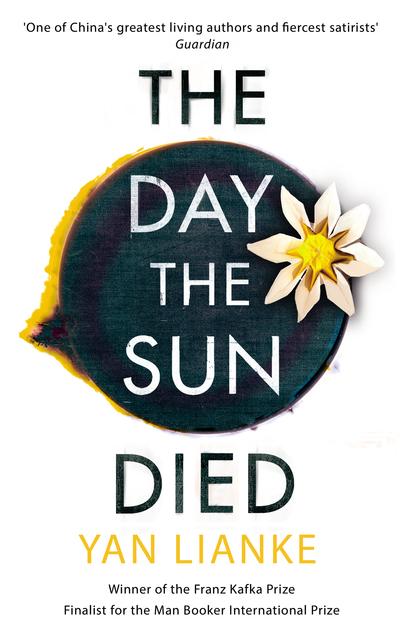
Yan Lianke-A Master of Chinese Literature, Book Festival 27.08

One of China’s renowned novelists, Yan Lianke, winner of the two of China’s most prestigious literary honours, the Lu Xun and the Lao She prizes,  will make appearance in Edinburgh this August.

Shortlisted for the Man Booker International Prize three times, winner of the International Franz Kafka Prize, Beijing-based writer Yan Lianke makes Edinburgh his first UK festival visit, launching his new novel The Day the Sun Died.

the day the sun died

BIOGRAPHY

Yan Lianke was born in Song County, Henan Province, China. Though he lives in Beijing, he has said that his heart remains in Henan, and he has based numerous works on life in Henan. He entered the army in 1978. He graduated from Henan University in 1985 with a degree in politics and education. In 1991, he graduated from the People’s Liberation Army Art Institute with a degree in Literature.

yan lianke

He started writing in 1978 and his works include: Xia Riluo (夏日落), Serve the People! (为人民服务), Enjoyment (受活), and Dream of Ding Village (丁庄梦). He has also published more than ten volumes of short stories. Enjoyment, which was published in 2004, received wide acclaim in China.

Don’t miss this rare opportunity to see an acclaimed novelist this August!

Chinese Character Introductory Course

This 5-week Chinese character introductory course is designed for beginners with an interest in visualizing and memorizing Chinese characters. The course is taught in English. By the end of the course students should be able to understand:

  • how Chinese characters have been evolved through the history
  • the structure of Chinese characters
  • principles of formation
  • radicals and rules of stroke order
  • at least 150 Chinese characters

Course details:

  • Start date: Wednesday, 4 July
  • Duration: 5 weeks
  • Day(s) and Time(s): Every Wednesday from 6pm-7:30pm
  • Price: £65

 Course Content:

  • The structure of Chinese characters
  • Character components and radicals
  • Rules of stroke order
  • Phonetic and semantic components of Chinese characters
  • How to use a Chinese dictionary
  • How to input Chinese characters by computer

Teaching Methods:

The course is tutorial-based with a combination of joint class activities and group work. Supplementary material is prepared by the teacher. In order to fully benefit from the course and to achieve the learning outcomes, students are expected to spend 1-2 hours per week on revision and homework.

Core Readings:

Course materials will be provided by the teacher at the classes.

To book and pay online please use the University ePay system.  Alternatively download this Summer 2018 Chinese Language Course Form then complete and return it to the Confucius Institute for Scotland with a cheque for the correct amount made out to the University of Edinburgh.

Easy Chinese

An introductory course for learners who have no prior knowledge of the Chinese language. It is designed for those who want a short focused introduction to Chinese language learning. Running for 12.5 hours over 5 weeks, this course takes learners through basic expressions needed in typical conversational situations. Pronunciation and communicative practice will be the focus of this course. By the end of the course students will have started to tune in to the sounds of Chinese language and the tones, and have learned some basic phrases used in for social interaction.

Course Details:

  • Start date: Thursday 5 July
  • Duration: 5 weeks
  • Day(s) and Times(s): Every Thursday from 10am-12.30pm
  • Price: £85 (including material)

Course Content:

  • Pronouncing Chinese names
  • Understand cultural aspects and key vocabulary on Greetings
  • Daily useful expressions
  • Expressing gratitude or objections
  • Health Topics

Teaching Methods:

The course is lively and engaging with a combination of joint class activities and group work. Supplementary material is tailored by the teacher. Students will be taught in a small group with the emphasis on the skill of social communication in Chinese.

To book download this Summer 2018 Chinese Language Course Form then complete and return it to the Confucius Institute for Scotland with a cheque for the correct amount made out to the University of Edinburgh.

Chinese Language Summer School Week 2 – Beginners 2

This course is designed for those who have either completed the previous Summer School Chinese language Beginners 1 or have acquired a similar level of proficiency. Students will learn more measure words and attributive adjectives, both of which can enable students to compose longer sentences. With the learning of expressions regarding calendar and clock times, students will be able to state more details regarding everyday life in conversations. There will be ongoing work to encourage student to recognise and write Chinese characters. By the end of 25 hours of intensive learning over one week students should be able to:

  • Handle simple conversations in settings such as shopping, dining at restaurants, making appointments over the phone;
  • Talk about one’s abilities, hobbies and wishes;
  • State information regarding times and locations.

Course Details:

  • Start date: Monday, 9th July
  • Duration: 5 Days
  • Day(s) and Times(s): Mon 9 – Fri 13 July 2018, 10am-4pm
  • Price: £187.50 (including material)

Course Content:

  • Asking for permission and expressing requests;
  • Shopping and ordering food;
  • Talk about one’s hobbies;
  • Phone conversations

Teaching Methods:

The course is tutorial-based with a combination of joint class activities and group work. Supplementary material is prepared by the teacher.

Core Reading:

Wu Zhongwei. Contemporary Chinese for Beginners. Beijing: Sinolingua, 2010. This book will be provided to registered students at the start of the course.  Please contact info@confuciusinstitute.ac.uk if you already have a copy of this book.

To book and pay online please use the University ePay system.  Alternatively download this Summer 2018 Chinese Language Course Form then complete and return it to the Confucius Institute for Scotland with a cheque for the correct amount made out to the University of Edinburgh.

Book both weeks of Summer school Day Time class Beginners 1 and 2 for a discount price of £325 including learning materials.

Chinese Language Summer School Week 1 – Beginners 1

This course is designed for complete beginners with little or no knowledge of Chinese language. Basic listening and speaking skills are emphasized along with the study of pinyin, the official Romanisation system for Standard Chinese (普通话, Pŭtōnghuà, literally ‘common speech’) in mainland China. By the end of 25 hours of intensive learning over one week, students will:

  • Have a basic knowledge of Chinese language;
  • Be able to use basic grammatical and sentence structures to introduce oneself and to engage in simple conversations;
  • Have basic knowledge of Chinese names, some traditional custom and family structures.

Course Details:

  • Start date: Monday, 2nd July
  • Duration: 5 Days
  • Day(s) and Times(s): Mon 2 – Fri 6 July 2018, 10am-4pm
  • Price: £187.50 (including material)

Course Content:

  • Pinyin – the official Romanisation system for Standard Chinese in mainland China;
  • Vocabulary and expressions regarding speaking about one’s name, nationality, language skills and family;
  • Expressions regarding stating one’s wishes;
  • A brief introduction to Chinese writing system;
  • Numbers.

Teaching Methods:

The course is tutorial based with a combination of joint class activities and group work. Supplementary material is prepared by the teacher.

Core Reading:

Wu Zhongwei. Contemporary Chinese for Beginners. Beijing: Sinolingua, 2010. This book will be provided to registered students at the start of the course.  Please contact info@confuciusinstitute.ac.uk if you already have a copy of this book.

To bookdownload this Summer 2018 Chinese Language Course Form then complete and return it to the Confucius Institute for Scotland with a cheque for the correct amount made out to the University of Edinburgh.

Book both weeks of Summer school Day Time class Beginners 1 and 2 for a discount price of £325 including learning materials.

History of Art Lecture

The Dragon-Boat Race Paintings of Song and Yuan Dynasties — Searching for The Dragon-Boat Race in The West Lake Attributed to Zhang Zeduan 宋元龙舟题材绘画研究—以寻找张择端《西湖争标图》卷为例

Time: Monday 28th May 2018, 15:00-17:00

Venue: Hunter Lecture Theatre, Edinburgh College of Art, 74 Lauriston Place, Edinburgh, EH3 9DF

This lecture aims to reconstruct the influence of Northern Song painter Zhang Zeduan, the artist of The Riverside Scene at Qingming Festival (清明上河图) and The Dragon-Boat Race in The West Lake (西湖争标图), to the Southern Song and Yuan court painters. The postscript by Zhang Zhun of the Yuan dynasty suggests that both hand scrolls attributed to Zhang Zeduan remain in the collection of the Yuan court before 1351. It is inferred in the thesis that the hand scroll of Dragon-Boat Race (龙舟夺标图) in the collection of the Palace Museum that is most likely created by Yuan court artist Wang Zhenpeng whose paradigm much influenced many works of the common theme during the Yuan dynasty, took after the climax of The Dragon-Boat Race in The West Lake of Zhang Zeduan. While The Dragon-Boat Race in The West Lake is now lost, the album of Dragon-Boat Regatta in Jinmingchi Lake (金明池争标图) in the collection of Tianjin Museum, possibly made by Liu Songnian of the Southern Song court, offers a scope to our study of the typical mode of dragon-boat race painting prior to the fourteenth century. Through a comparative analysis of such dragon-boat race paintings, this study traces the development of dragon-boat race as a painting genre, and in turn the reconstruction of the theme furthers our understanding of the socio-political context behind these festive races.

Speaker: Prof. Hui YU is a Senior Curator and Director, Research Institute, Palace Museum Beijing, Heinz-Götze-Visiting Professor of Chinese Art History, University of Heidelberg.

*The lecture will be given in Chinese with English-text supplement.