Edinburgh International Culture Summit Special Edition 2020

The Edinburgh International Culture Summit is a biennial ministerial forum established in 2012 by the Edinburgh International Festival in a unique partnership with the British Council, Scottish Parliament and the Scottish and UK Governments.

The Confucius Institute for Scotland is delighted to be one of the supporters of this year’s Edinburgh International Culture Summit. The 2020 Special Edition will be launched from 22 August. For full programme and to book the summit webinars, please visit HERE

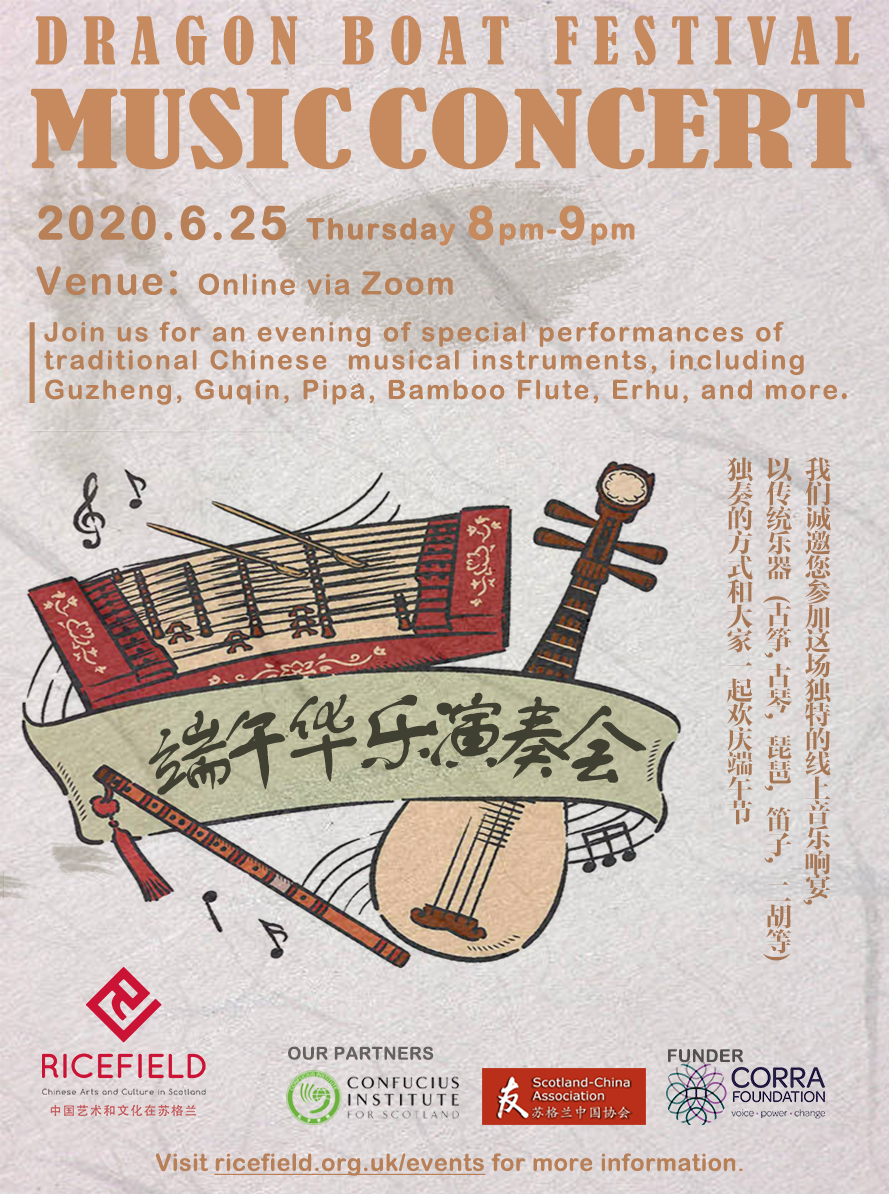
Dragon Boat Festival Music Concert – Thur 25 June 8-9pm

Celebrate Dragon Boat Festival with an evening of traditional Chinese music – enjoy the free online concert from home! 

Ricefield Arts’ Scotland-based performers will be showcasing traditional Chinese instruments, including guzheng, guqin, pipa, bamboo flute, erhu, as well as opera singing. You’ll hear songs from both China and Scotland, as well as learning more about the history of Chinese music and this unique cultural festival.

This joint Dragon Boat Festival celebration is organised by Ricefield Arts in partnership with Confucius Institute for Scotland and Scotland-China Association.This event is supported by Corra Foundation, as part of our Wellbeing project.

Event Details:

Date: Thursday 25 June

Time: 8-9pm

Please book your place via Eventbrite HERE.

Dragon Boat Festival Music Concert Poster


Music Confucius Institute (MCI) Online Concert – Sunday 14 June

The Music Confucius Institute (MCI) at the Royal Academy of Music in Denmark invites you to an online concert with traditional Chinese instruments.

The MCI musicians will display the colours of the Chinese sound universe by performing both Western and Chinese music on traditional Chinese instruments. The music will be both contemporary pieces and traditional music, from all over China – and will take you a trip to Denmark as well.

After the concert, you are invited to an online Zoom meeting, where you will meet the musicians to ask questions about the music, instruments, and Chinese culture.

Concert Information: 

Date: Sunday, 14 June
Time: 3pm (Paris time)
Duration : an hour + Q&A

Visit MCI facebook page for a live broadcast: https://www.facebook.com/MusicConfuciusInstitute/

Coronavirus (Covid-19): Important Announcement

The Confucius Institute for Scotland campus is temporarily closed from Friday 20 March 2020 to students and public due to the outbreak of COVID-19. All 2021 Autumn classes are running remotely using the online platform Zoom. Our administrative team is working from home. Please contact us by email info@confuciusinstitute.ac.uk if you have any enquiry.

If you have any concerns about the Coronavirus (COVID-19) outbreak, it may be helpful to know that the university’s FAQ pages continue to be the best place to obtain the most up-to-date information HERE


Award Celebrates Scotland-China Partnership

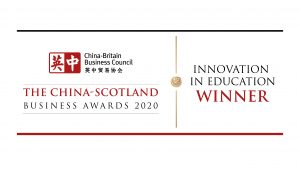
award

The Donghua Edinburgh Centre for Creative Industries (DECCI) – which is hosted by Edinburgh’s Confucius Institute and Donghua University’s Shanghai International College of Fashion and Innovation (SCF) – has won the China-Britain Business Council’s Innovators in Education award.

Watch below interview with our director Professor Natascha Gentz to learn more about the work DECCI does between Scotland and China.

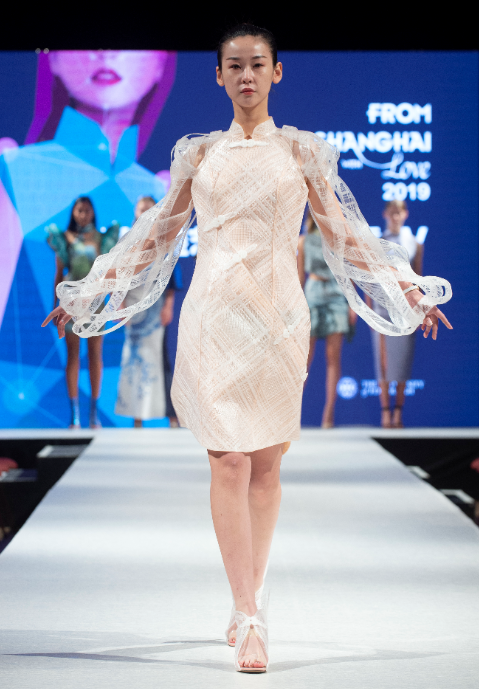
The prize recognises a partnership which began as a joint programme of teaching and research at the Shanghai International College of Fashion (SCF). With the establishment of the DECCI in Edinburgh, a program of cultural activities for the wider community was rolled out, including an annual Fringe fashion show, a summer school programme and lecture series involving several thousand participants.

International partnership

The China-Scotland Business Awards, the only China-focused business awards in Scotland, are organised by the China-Britain Business Council. This year they were in partnership with Scottish Enterprise.

The awards celebrate the expanding trade and investment ties between Scotland and China.The judging panel said the Donghua Centre for Creative Industries showcased a novel approach to cross-cultural education, offering students in both countries the opportunity to engage and expand their own creative visions.

From Shanghai

Edinburgh’s relationship with Donghua is longstanding. In 2014 the two institutions launched a joint education programme based in the SCF, part of Donghua University.

Fashion collaboration

Shanghai-based students studying Fashion Innovation or Fashion Interior Design have the chance to study at Edinburgh College of Art for the final two years of their programme.

In September 2016 the University signed a Memorandum of Understanding with Donghua University to establish DECCI.

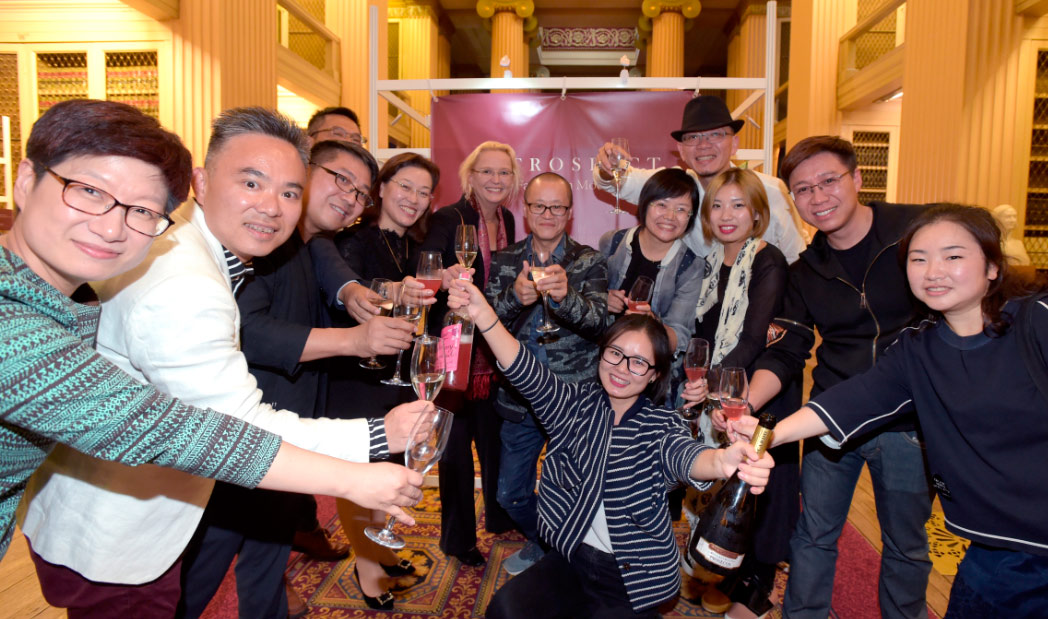
The centre builds on both universities’ strengths in fashion design and creative industries. Professor Natascha Gentz, Assistant Principal (China) and Director of the DECCI received the award at the Annual CBBC Burns Supper with Juliette MacDonald, Dean International at SCF.

Award Celebration

We are extremely pleased that DECCI and SCF have won this award for innovation in education. In the past three years, our colleagues in the Confucius Institute for Scotland, Donghua University and Edinburgh College of Art have worked passionately together to produce a wide range of exciting educational and cultural programmes, as well as a joint research agenda on Shanghai fashion and sustainable fashion. I believe our partnership will grow from strength and strength through further innovation and closer collaboration with all partners.Professor Natascha Gentz, Assistant Principal (China)

Chinese Silent Films, BO’NESS HIPPODROME: Sat. 21 March

For the fifth year our Institute is supporting Hippfest – Scotland’s only festival dedicated to silent cinema with world-class music, red carpet glamour, and rarely-seen silent era films. Taking place in the retro surroundings of the Hippodrome, Bo’ness.

Saturday 21 March 2020: 16:00

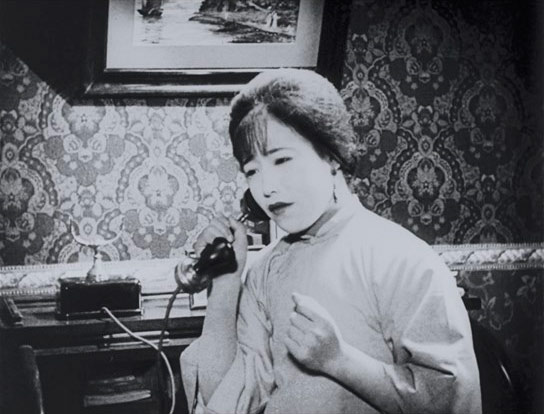
A STRING OF PEARLS 

string of pearls

A social climbing, middle-class housewife cajoles her husband into borrowing an expensive necklace to wear at a party. Her ostentatious display succeeds in making a big impression but, on the night of the party, the necklace is stolen and her husband ends up embezzling funds to pay for the loss, triggering a downward spiral in their fortunes. Boasting some surprisingly lovely cinematic touches, and moody lighting, the film also offers a fascinating look at rich, Westernized life in 1920s Shanghai. The story is based on Guy de Maupassant’s short story The Necklace.

Visit HERE for full details of the progamme and to book your ticket.

Chinese New Year Party, Friday 31 January – Cancelled

We regret to inform you that in view of the current situation and out of solidarity with and concern for friends and colleagues in China it has been decided to cancel our Chinese New Year Celebration this Friday, 31 Jan.

Many of our friends, family, students and colleagues in the UK and China are currently unable to enjoy the Spring Festival as they would normally, be that due to travel restrictions or the cancellation of many large events. We therefore think it would be inappropriate to have a large celebration at our end.

Should you have any questions, please do not hesitate to contact us.

Asian Studies Seminar – Wednesday 22 January 2020

Date: Wednesday 22 January

Time: 4-6pm

Venue: Project Room (1.06), 50 George Square, University of Edinburgh

“Has PRC Counter-Terrorism in Xinjiang Evolved into State Terror?”

Abstract:

In this talk, I provide an overview of China’s programme of ‘de-extremification’ and extra-judicial mass internment of Turkic Muslims in Xinjiang since early 2017. I then situate this development against the ‘ideological turn’ in Chinese Communist Party policy under President Xi Jinping, highlighting the new emphasis on stability maintenance and ideational governance. Finally, I bring evidence of insecurity, fear and trauma in Uyghur communities in- and outside of Xinjiang in the era of internment to consider how far PRC counter-terrorism initiatives have now evolved into state terror. In doing so, I apply Ruth Blakeley’s (2012) definition of state terror as a deliberate act of violence against civilians, or threat of violence where a climate of fear is already established by earlier acts of violence; as perpetrated by actors on behalf of or in conjunction with the state; as intended to induce extreme fear in target observers who identify with the victim; and as forcing the target audience to consider changing its behaviour.

Biography: 
Joanne Smith Finley is Senior Lecturer in Chinese Studies in the School of Modern Languages, Newcastle University, UK. Her research interests include evolving Uyghur identities in Xinjiang, China; strategies of symbolic resistance in Xinjiang; the gendering of ethno-politics in Xinjiang; gender in Xinjiang and the Uyghur diaspora in the context of Islamic revival; and PRC counter-terrorism as state terror in the era of mass internment. Her monograph The Art of Symbolic Resistance: Uyghur Identities and Uyghur-Han Relations in Contemporary Xinjiang (Brill Academic Publishing) was published in 2013. This is an ethnographic study of evolving Uyghur identities and ethnic relations over a period of 20 years (from the 1991 collapse of the Soviet Union through the 1997 Ghulja disturbances and the 2009 Ürümchi riots to 2011). Dr Smith Finley is co-editor of two volumes: Situating the Uyghurs between China and Central Asia (Ashgate, 2007) and Language, Education and Uyghur Identity in Urban Xinjiang (Routledge, 2015), and Guest Editor of a Special Issue (2019) for Central Asian Survey, titled: ‘Securitization, Insecurity and Conflict in Contemporary Xinjiang’.

All Welcome! No booking required!

Upcoming Lecture:

“A Brief Cultural History of the Korean-Chinese Diaspora”

Date: Wednesday 29 January

Time: 4-6pm

Venue: Project Room (1.06), 50 George Square, University of Edinburgh

Abstract:

This presentation deals with the representation and changes in identity in the literature, music and movies of ethnic Koreans in China by looking at debates on diaspora and migrant cultural identity. This presentation looks at how the Korean-Chinese have represented and forged their identity throughout numerous historical and social changes in the second half of the 20th Century. Through a study of their literature, films and songs I will show that the strength of their cohesion is not based solely on holding on to an essentialized ethnic identity, but is mainly thanks to a high adaptability to reshape their identity at various stages in their history. I will shows that the fast-changing pace of historical and social processes found in Korean-Chinese society makes it difficult to get a clear definition of the Korean-Chinese possessing diaspora or migrant identity features, as their cultural expressions clearly show a mix between diaspora, migration and transnational identity simultaneously.

Chinese Visual Festival – Chinese New Year Programme 2020

Chinese Visual Festival is returning to Scotland this January to celebrate Chinese New Year with a programme featuring the popular documentary Four Springs and three films noirs including the new release: The Wild Goose Lake by Diao Yinan, screened in partnership with MUBI.

Wrath of Silence 暴裂无声 (Glasgow)
Saturday 25th January, 18:00
Screening followed by drinks reception
https://www.cca-glasgow.com/programme/chinese-visual-festival-wrath-of-silence
Trailer: https://www.youtube.com/watch?v=VWd-EJx3q4w

Four Springs 四个春天 (Edinburgh)
Saturday 25th January, 19:00
Heart-warming documentary and box office success in China
https://www.summerhall.co.uk/event/chinese-visual-festival-four-springs-screening/
Trailer: https://vimeo.com/315786514

The White Goose Lake 南方车站的聚会 (Glasgow)
Sunday 26th January, 14:00
In competition at Cannes 2019
This film will screen in partnership with MUBI.
https://www.cca-glasgow.com/programme/chinese-visual-festival-the-wild-goose-lake
Trailer: https://www.youtube.com/watch?v=-oCq5oa8Wzg

Black Coal Thin Ice 白日焰火 (Glasgow)
Sunday 26th January, 17:00
Golden Bear 2014
https://www.cca-glasgow.com/programme/chinese-visual-festival-black-coal-thin-ice
Trailer: https://www.youtube.com/watch?v=WXm1XcjP13E

Full CVF Chinese New Year programme here:
http://chinesevisualfestival.org/headline/chinese-new-year-2020/


5 Weeks Daytime Chinese Brush Painting Starts 5 March – CANCELLED

Discover the fascinating art of Chinese brush painting and try your hand at this expressive art form. This course is suitable for beginners or people who have painting experience but have never tried Chinese brush painting techniques before. No prior knowledge is necessary, you should simply be keen to learn and willing to hold a brush. All the materials used during the course will be provided.

Using Chinese soft brushes, ink and colors, you will be shown how to achieve wonderful animal paintings in freehand Xieyi style. Participants will have the option to select from a range of subjects demonstrated by the tutor, such as Crane, a mystical creature in China, Japan and other East Asian countries, is the symbol of longevity and good fortune, tiger symbolizes determination and strength and Giant panda, the black & white fur is also perfect for monochrome ink painting.

Students can anticipate completing at least one piece of Chinese painting artwork per class. Demonstration and plenty of personal attention will be provided during the class. This course is suitable for both beginners and advanced students.

The cost is £125 for the 12.5 hour course which runs Thursday mornings from 10.00am – 12.30pm from 5 March 2020. There is a concession rate of £100, which is offered only to full time students. The fee includes all materials. A minimum of five students are required to ensure the class goes ahead.

To secure your place on this enjoyable course please use the University’s ePay system or you can download this PDF Form which you will then need to complete and return to our office with a cheque made out to the University of Edinburgh for the appropriate amount. (Please note we are no longer accepting cash payment in our office)

This course will be led by Chi Zhang, experienced art tutor, shortlisted of ‘Sky Art Landscape Artist of the year 2015’. For more information and see Chi’s work please visit http://www.chizhangartist.com

If you have any questions please contact us on 0131 662 2180 or email info@confuciusinstitute.ac.uk

Key Information

Course: Five week Chinese Brush Painting – Xieyi style (Daytime)
Date + Time: Thursday Mornings: 5 March – 2 April, 10:00-12:30pm
Cost: £125 (£100) including all materials
Location: Confucius Institute for Scotland Campus, Abden House

One to one tutorials and small group workshops can also be arranged. Please email info@confuciusinstitute.ac.uk or call us on 0131 662 2180 to discuss further.

5 Weeks Daytime Chinese Calligraphy Starts 4 March – CANCELLED

The five week course runs from Wednesday morning 4 March to 1 April 2020 will be led by Chi Zhang, the Institute’s experienced calligraphy teacher. This course will start by introducing common techniques related to the Chinese soft brushes and ink. Students will also learn the basic strokes of Regular Style. Regular Style (Kai Shu) is most common in modern writings and publications. This writing style is suitable for both beginners and students who learned Clerical Style before. With a maximum of 12 students in the class plenty of personal attention is guaranteed as well as clear demonstrations and instructions to help students develop their skills.

Students can anticipate completing at least one piece of Chinese calligraphy artwork per class. The contents of this work could be a selected Chinese poems or perhaps an ancient master’s quotation.

The cost is £125 for the 12.5 hour course which runs Wednesday mornings from 10.00am – 12.30pm from 4 March 2020. There is a concession rate of £100, which is offered only to full time students. The fee includes all materials. A minimum of five students are required to ensure the class goes ahead.

To secure your place on this enjoyable course please use the University’s ePay system or you can download this PDF Form which you will then need to complete and return to our office with a cheque made out to the University of Edinburgh for the appropriate amount. (Please note we are no longer accepting cash payment in our office)

This course will be led by Chi Zhang, experienced art tutor, shortlisted of ‘Sky Art Landscape Artist of the year 2015’. For more information and see Chi’s work please visit http://www.chizhangartist.com

If you have any questions please contact us on 0131 662 2180 or email info@confuciusinstitute.ac.uk

Key Information

Course: Five week Chinese Calligraphy – Regular style (Daytime)
Date + Time: Wednesday Mornings: 4 March – 1 April 2020, 10:00-12:30pm
Cost: £125 (£100) including all materials
Location: Confucius Institute for Scotland Campus, Abden House

One to one tutorials and small group workshops can also be arranged. Please email info@confuciusinstitute.ac.uk or call us on0131 662 2180 to discuss further.

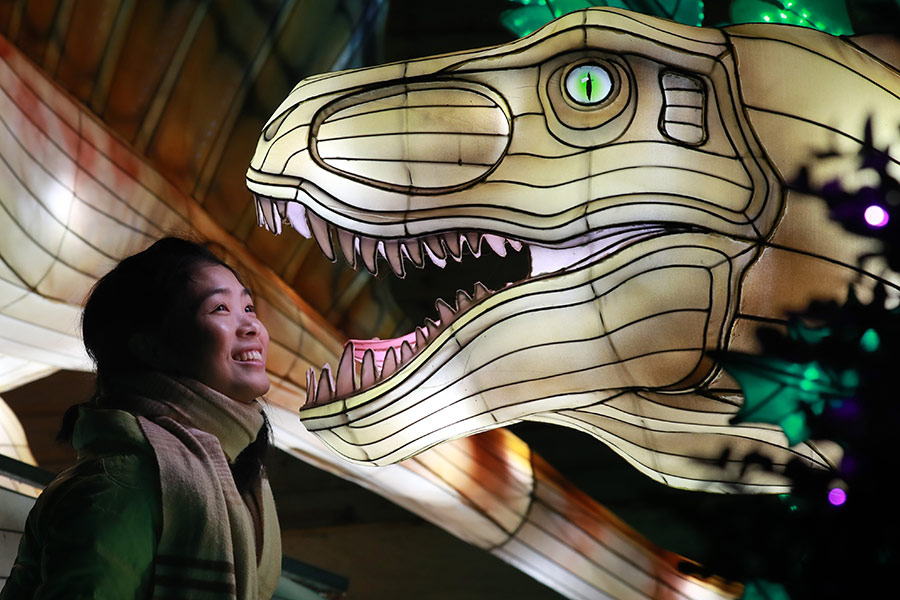
Giant Lanterns Lost Worlds at Edinburgh Zoo 15 Nov – 26 Jan 2020

Edinburgh Zoo Lanterns
Picture by Stewart Attwood

The award-winning Giant Lanterns returns to Edinburgh Zoo, but with a whole new theme for 2019. Running across 47-nights, this extravaganza is based around a Lost Worlds theme, where hundreds of prehistoric creatures will be brought to life to present a visually stunning display of the history of wildlife. 

Discover 570 million years of wildlife, from when the origins of life appeared as a dazzling array of tiny microbes, to a world where dinosaurs were born and the ice age gave way to the forgotten giants of the animal kingdom.

This is the third year the Confucius Institute for Scotland in the University of Edinburgh in partnership with Royal Zoological Society of Scotland (RZSS) for this season’s Giant Lanterns festival. 

Book your ticket from Edinburgh Zoo website HERE

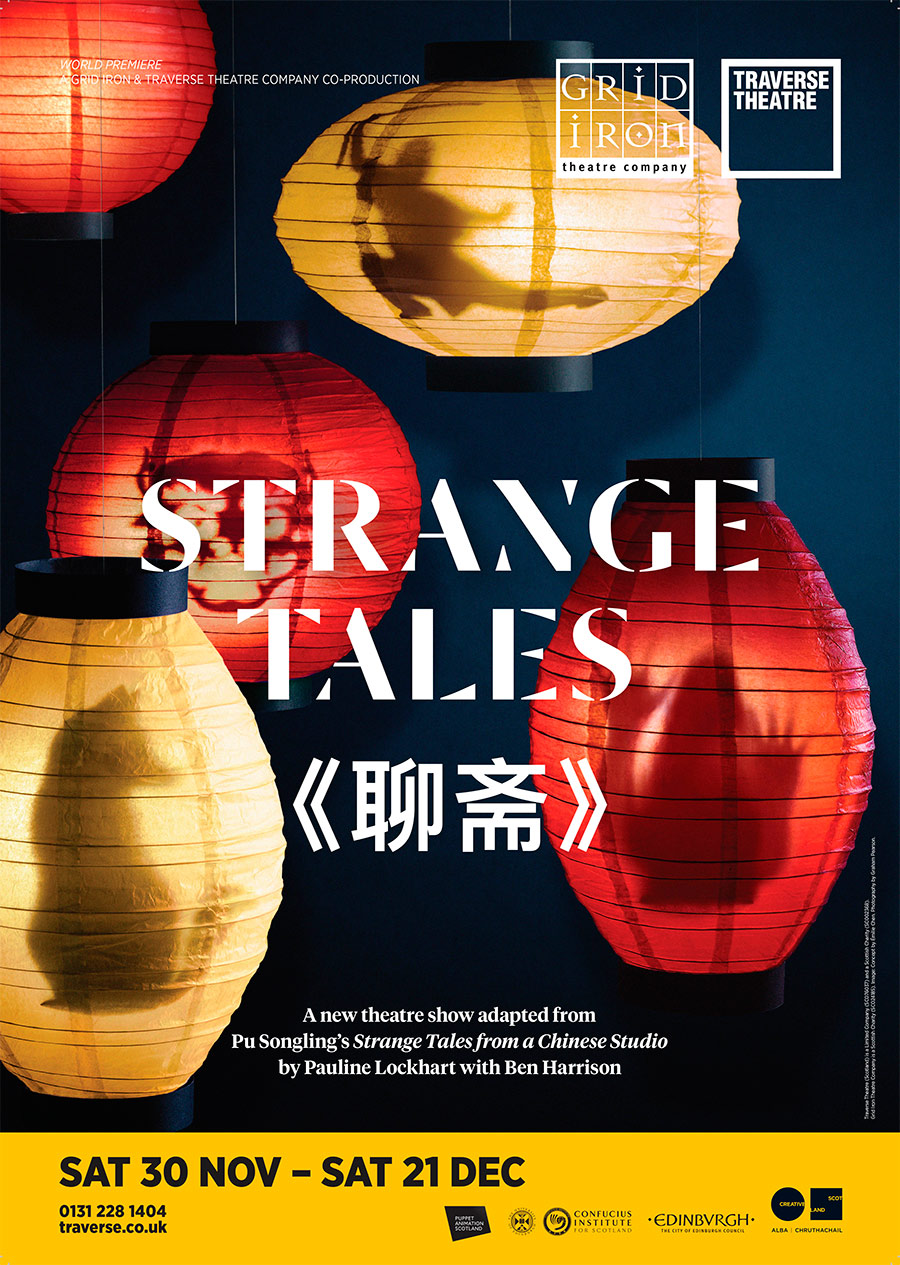
Strange Tales (聊斋), Traverse Theatre, 30 Nov – 21 Dec 2019

When wind and snow fill the sky and the fire has grown cold, relight the coals, warm the wine and turn up the wick of the lamp. We enter these tales in the shadows of night, but hopefully emerge into daylight.

Strange Tales is presented by theatre company Grid Iron in co-production with the Traverse Theatre and in partnership with The Confucius Institute for Scotland in the University of Edinburgh.

Based on Pu Songling’s legendary Strange Tales from a Chinese Studio, audiences can expect to be beguiled and bewitched by brand new adaptations of a selection of these renowned tales, involving innovative new digital technology, puppetry and illusion. Though written centuries ago, they feel remarkably current, reflecting and commenting upon many aspects of modern society – greed, attraction, arrogance and hope, among many others. But you must enter the production’s immersive and spellbinding world with an open mind and a brave heart if you’re to escape these tales ever again….

Adapted by Pauline Lockhart (Schooled) and Ben Harrison (Jury Play, Spring Awakening) from a selection of Pu Songling’s original tales, Strange Tales will wrap itself around you and make you shiver in delight and fright on Edinburgh’s dark winter nights.

Date: Saturday 30 November – Saturday 21 December

Location: Traverse Theatre, 10 Cambridge St, Edinburgh EH1 2ED

Price: Previews £15 / £10 / £5 | Full price £20 | Standard concession £16 | Under 30s / Student £14 | Other concession £5

Age guide: 14+

Detailed information about the show and to book the ticket, please visit Traverse website: HERE 

strange tales

Special Lectures on Chinese Art – 28 & 29 Oct

Professor Jing Lyu | Fudan University, Shanghai

Lecture 1: Retrieving the Glory of Lacquerware in Ancient China
28 Oct 2019 16:30-17:30 | Seminar Room A, Fire Station, Edinburgh College of Art

Lecture 2: Between Innovation and Tradition: Xiaojiaochang New Year Prints in Shanghai
29 Oct 2019 11:10-13:00 | Seminar Room C, Fire Station, Edinburgh College of Art

Jing Lyu (吕静) is a Professor in the Department of Cultural Heritage and Museology at Fudan University, Shanghai. She obtained her bachelor’s degree and master’s degree in history at Fudan University and completed a doctorate in literature at Tokyo University. Before joining Fudan University in 2005, she served as a researcher at the Institute of History of Shanghai Academy of Social Sciences and the Institute of Oriental Culture of Tokyo University, and lecturer at the University of Sacred Heart. The research interest of Professor Lyu includes the ancient history of China, the history and society of East Asia, and cultural relics. She focuses on the study of oracle bones, bronzes, bamboo slips, lacquerware and intangible cultural heritage. Her books include Research of Mengshi (盟誓) in Spring and Autumn Period: A Reconstruction of Society based on Religious Cults (2007) and The Collection of Oracle Bones at Fudan University (2019), and translation of The Society and Country of Ancient China (2018). She also manages more than ten research projects, including the art project of National Social Science Fund, The Investigation and Research on Ancient Chinese Lacquerware collected in Japan, Shanghai Philosophy and Social Science Project, Shanghai Pujiang Talent Project, Project of National Cultural Relics Bureau, and the international project funded by Japan Society for the Promotion of Science. Professor Lyu is the awardee of research excellent of Shanghai Philosophy and Social Science (2011).

Lecture 1: Retrieving the Glory of Lacquerware in Ancient China
28 Oct 2019 16:30-17:30 | Seminar Room A, Fire Station, Edinburgh College of Art

China is the only original country of lacquer throughout the world, and lacquerware, which is made of lacquer, is an invention of ancient China in prehistoric times. By using lacquer as glue or enhancer, this kind of artefact was more multifunctional and endurable, especially in an ancient society where resources were limited and tools were rude. The production and use of lacquerware not only show the wisdom of Chinese ancestors, but also make great contributions to world civilisation. The technique of producing lacquerware also has a significant influence in neighbouring countries, such as Japan, Korea, Vietnam, Thailand, Burma and Cambodia.

At least 8,000 years ago, the residents living along the Lower Yangtze River had been varnishing artefacts with lacquer. After the end of the Bronze Age and before the mass production of porcelain, lacquerware reached the first peak in the history of China. During the first peak, from the Warring States Period to the Han Dynasty, the amount and types of lacquerwares exploded. They appeared in nearly every aspect of life, including catering and ceremonial vessels, entertainment equipment, furniture, architecture, religious utensils, military affairs, etc. Various techniques were applied on lacquerwares, like varnishing, painting, needle painting, metal embroidering, metal foil decorating and inlay. Both nobles and civilians were able to use lacquerware in their daily life due to its availability in quantity, so that lacquerware helped to enhance living quality in early China.

Later in the Tang Dynasty, the technique of lacquerware was highly advanced. As Tang culture spread out into Korea and Japan, lacquerware also permeated the society, politics, religion and art in these countries, which marked the second peak of Chinese lacquerware. The third peak was located from the Song to the Qing Dynasty when the techniques of lacquerware, such as carving, gold and silver inlay, and mother-of-pearl inlay, advanced to the pinnacle and brought incomparable aesthetic experience. This period symbols the optimal level of Chinese lacquerware. The lecture will first give an overview of the development of lacquerware in China. It will also discuss how the production of lacquerware contributed to the cross-cultural and artistic interactions between countries in East Asia.

Lecture 2: Between Innovation and Tradition: Xiaojiaochang New Year Prints in Shanghai
29 Oct 2019 11:10-13:00 | Seminar Room C, Fire Station, Edinburgh College of Art

Chinese New Year Prints originated from the door gods with the meaning of lustrum on time change (New Year). After the Song Dynasty, with the development of block printing, New Year Prints were in mass production and were increasingly accessible to the masses. The customs were further flourished. New Year Prints from different regions had different genres and styles, mainly four popular styles were recognised. Derived from Taohuawu New Year Prints in Suzhou, Xiaojiaochang New Year Prints in Shanghai is a carrier of Shanghai School’s artistic expression. Not only delivering realistic themes, diversified forms, westernized materials and modernized technology, such type of prints had a strong aftereffect, which laid the foundation for the emergence of novel advertising pictures and popular calendar posters (yuefenpai) of modern Shanghai.

Please note the lectures will be given in Chinese with spontaneous translation.

All Welcome!

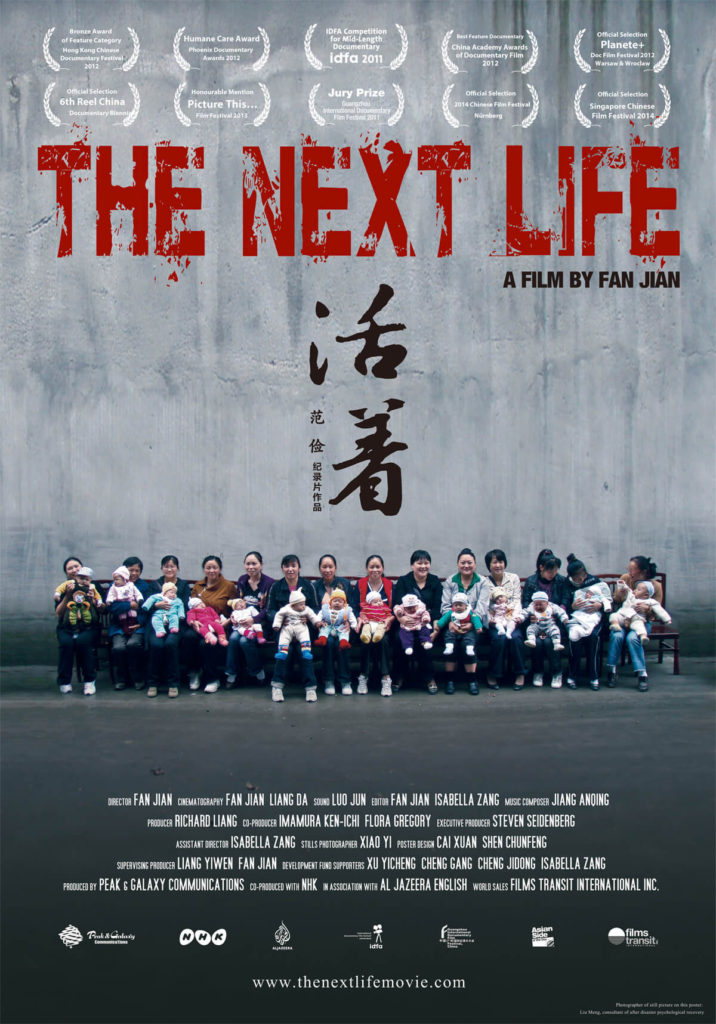
Chinese Film Documentary IV: The Next Life + A Second Child on 11 November

Fan Jian is a documentarian who focuses on Chinese social issues through character-driven storytelling. He has directed six feature-length documentary films, most recently Still Tomorrow, winner of a Special Jury Award at IDFA 2016. His films The Next Life (2011) follows a working-class couple lost their only child in the 2008 Sichuan Earthquake. When the earthquake hit, Zhu, the father, tried to rescue his beloved daughter from the rubble but failed, plunging the couple’s happy life into darkness and uncertainty. The sequel, a short entitled A Second Child (2019) records how the same couple struggle to recover from the painful past.

When talking about the film and the time he spent with the couple, Fan Jian said, “The long-term mental health damage to disaster survivors is equally as severe as the physical and economic damage to environment and society. This issue requires our immediate attention.”

These screenings form a part of Earth in Crisis Chinese Eco-documentary UK Tour curated by the Chinese Independent Film Network UK and sponsored by UK Arts and Humanities Research Council. The tour showcases a series of Chinese Eco-documentary films foregrounding the growing ecological emergency facing our planet and aims to encourage the discussion of such topics as sustainable development, anthropogenic climate change and human-environment relationships in the UK.

Join us for the opportunity to see The Next Life and A Second Child and also to meet the film director.

Date: Monday 11 November 2019

Location: Screening room (G.04), 50 George Square, EH8 9JU

Programme: 

17:30: Registration
18:00 – 19:30: Film Screening: The next life (2011)
19:30 – 20:00: Drinks Reception
20:00-20:30: Film Screening: A second child (2019)
20:30-21:00: Q&A

Tickets are free and can be secured by booking from HERE.

My World in War and Revolution-16 Oct @6-8pm

Location: The Playfair Library Hall, Old College, University of Edinburgh, EH8 9YL

Date and Time: 16 Oct, 2019. 1800-2000

Each year the University hosts a series of inaugural lectures given by Professors or Chairs newly appointed by the University. The speakers give an illuminating overview of their contribution to their field.

In both the East and the West the diaries is an ancient genre, but it underwent important changes in the modern era. Simultaneously, the social structure, media environment, and political regimes also transformed rapidly.

In this lecture, Professor Aaron Moore focuses on the relationship East Asian modernity shared with the personal diary, which came to both reflect and contribute to phenomena such as ‘total war’ mobilisation, revolution, and the experience of childhood. Moreover, having examined hundreds of diaries from around the world, Moore introduces a methodology for reading personal diaries that emerged out of his comparative approach to modern history. Despite the considerable cultural and ideological differences between China, Japan, America, the USSR, and Britain, the usefulness of the diary as a tool for self-discipline emerged almost simultaneously in each context, and this uncanny convergence must be explained.

Tickets for the event are free but must be booked in advance Here


Interested in sharing Chinese and East Asian stories?

The Traverse Theatre and Grid Iron Theatre Company are looking to connect with East Asian communities and individuals with an interest in traditional Chinese and East Asian storytelling to help develop a brand new theatre show. The new show will be based on Pu Songling’s Strange Tales from a Chinese Studio and will combine retelling of these tales with your own stories.

Dates
Thu 10 Oct, 7-9pm
Fri 11 Oct, 3-5pm

Venue
Saigon Saigon Restaurant, 14 S St Andrew St, Edinburgh, EH2 2AZ (near east end of Princes St)

These gatherings are free to attend and will include tea and snacks. You don’t need to bring anything – just come along to share conversation and stories. Mandarin speakers will be at
both gatherings.

To find out more, please get in touch with
info@traverse.co.uk or visit traverse.co.uk

Metamorphosis of a Butterfly: Xiyadie’s Queer Papercutting Art, 16 Oct @4-6pm

Date and Time: Wednesday, 16 Oct, 4 – 6 pm

Location: 50 George Square, Project Room (1.06), University of Edinburgh

Celebrated as ‘China’s Tom of Finland’, Xiyadie is probably one of the best-known queer artists living in China today. His identity as a gay man from rural China and his method of using the Chinese folk art of papercutting for queer artistic expression make him a unique figure in contemporary Chinese art. This talk examines Xiyadie’s transformation of identity in life and his representation of queer experiences in papercutting art. Using a critical biographical approach, in tandem with analysis of his representative artworks, I examine the transformation of Xiyadie’s identity from a folk artist to a queer artist. In doing so, I delineate the transformation and reification of human subjectivity and creativity under transnational capitalism. Meanwhile, I also seek possible means of desubjectivation and human agency under neoliberal capitalism and consider the role of art in this picture.

Dr Hongwei Bao is Associate Professor in Media Studies at the University of Nottingham, UK, where he also co-directs the Centre for Contemporary East Asian Cultural Studies (CEACS). He holds a PhD in Gender and Cultural Studies from the University of Sydney, Australia. His research primarily focuses on queer media and culture in contemporary China. He is the author of Queer Comrades: Gay Identity and Tongzhi Activism in Postsocialist China (NIAS Press, 2018). He has also published articles in Cultural Studies, Culture Unbound, Global Media and China, Health, Culture and Society, Interventions, Journal of Contemporary Chinese Art, Made in China Journal, Positions, and The JOMEC Journal.

No booking required. ALL WELCOME!