Exhibition from Shanghai Municipal Archives 28/29 June

An exhibition on the city of Shanghai is taking place in the first floor project room at 50 George Square in the University of Edinburgh’s Central campus. Opening on Tuesday 28 June from 4pm this exhibition from Shanghai Municipal Library presents the story of the historical development of Shanghai and considers its future through to 2020.

Shanghai Municipal Archives, established in 1959, is one of the national archives which has the largest collections in China, having over 3.6 million pieces in total at present. Over the years, the Archive has actively carried out cultural exchanges and cooperation overseas holding thematic archive exhibitions in more than 20 countries across all five continents.

This exhibition will be the first  in the UK. With the collection of photos, this exhibition shows the historical developments and changes of Shanghai, as well as the good relations between Shanghai and the United Kingdom over the past 170 years.

The exhibition will be formally opened at 4pm on Tuesday 28th June and be open to the general public on Wednesday 29th June from 10am till 5pm.  Admittance is free and all are welcome.

VENUE:  Project Room, 50 George Square, Edinburgh
DATE & TIME: Tuesday 28 June – Opening Reception from 4pm; Wednesday 29 June 10am-5pm

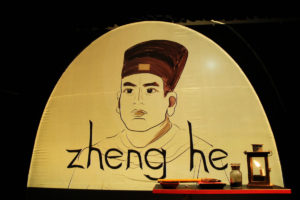
Zheng He–When the Dragon Ships Came

Over 500 people attended performances of Zheng He-When the Dragon Ships Came at Central Hall, Edinburgh organised by the Confucius Institute for Scotland in the University of Edinburgh, in association with SCEN on 9th June.

Students and staff from 17 primary and secondary schools, as well as the evening audience of adults and families, found the production to be quite magical and were enthralled by the powerful story-telling and entrancing staging.

Zheng HeZheng He-When the Dragon Ships Came relates the tale of the fantastic journeys of this famous Chinese explorer who with his fleet of more than 300 enormous ‘dragon ships’ sailed via Indonesia, India, and the Arabian Coast to Africa – almost 100 years before Columbus set sail for America. While every child in China knows the story of Zheng He’s travels, here, his adventures remain largely unknown.

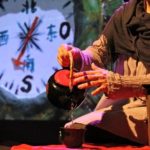
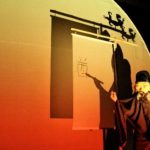
This production has won many plaudits for its innovative set design which features interaction between the screen and the action on stage. The animated films, video clips, shadow images and masks form a constantly changing visual narrative while the multi-lingual audio and musical score ensure that audience members are fully engaged by the production

‘Red Snow’ Film Screening & Discussion Mon 20 June

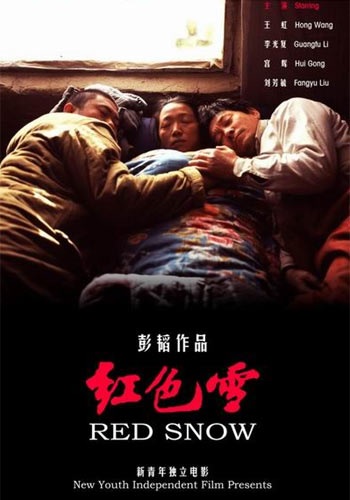
Join us for the opportunity to see Red Snow the first independent feature film from award winning director Peng Tao.

Red Snow

This is an ambitiously crafted cinematic experience. Peng seeks to capture the essence of the ten year Cultural Revolution by exploring the complicated relations between a peasant woman and three runaways- a veteran cadre, a red guard, and a young girl fleeing a natural disaster. The film is suitable age 18+

Red Snow is set in rural Shanxi and was produced in 2006 during the 40th anniversary of the Cultural Revolution.

This was director Peng Tao’s first independent feature film. In 2007 he produced Little Moth.

Following on from the showing there will be a round table discussion chaired by Professor Paul Pickowicz, Distinguished Professor of History and Chinese Studies at the University of California, San Diego, and inaugural holder of the UC San Diego Endowed Chair in Modern Chinese History.

  • 5.15pm-7.00pm: Film Screening of Red Snow (Chinese dialogue with English subtitles)
  • 7.00pm-7.30pm: Break (Drinks and sandwiches served)
  • 7.30pm-8.30pm: Discussion (Chaired by Professor Paul Pickowicz)

For further details, please download a copy of the programme.

The event is free, but as seat numbers are restricted, it would be very helpful if you could email info@confuciusinstitute.ac.uk if you are planning to attend the event.

This event is brought to you by  Chinese Studies in the University of Edinburgh and the Confucius Institute for Scotland

DATE: Monday 20 June
TIME: 5.15pm to 8.30pm
VENUE: Screening Room (G04), 50 George Square, Edinburgh, EH8 9JY.

Chinese Language Summer Courses – 1 July to 1 August

This summer we are offering both Day and Evening classes from 1 July to 1 August 2019.  Our diverse programme of evening and day time classes aims to give a wide array of opportunities to start to learn Chinese! In addition to our usual language programme, we will offer two weeks of intensive HSK revision and practice classes. These are ideal for people who are planning to take HSK levels 2 and/or 3 exams this year. Learners will have a total of 15 hours led by a teacher over the two week period. Each course is composed of three parts – mock tests, revision and practice.

Please note that online registration for the classes through Centre for Opening Learning will close from 22 June 2019. However, you can still register your class through the University Epay system  after the deadline.

SUMMER SCHOOL DAY TIME Classes 1 JULY– 1 AUGUST 2019

SUMMER COURSE DAY & TIME DATE FULL PRICE
  HSK 2 REVISION & PRACTICE 
Monday, Tuesday and Thursday

10am-12:30

 1 July – 11 July
15 hours
2.5 hrs x 6 days
     £102/£68        (materials not   included)
HSK 3 REVISION & PRACTICE


Monday, Tuesday and Thursday

10am-12:30

 15 July – 25 July
15 hours
2.5 hrs x 6 days
       £102/£68               (materials not       included)
EASY CHINESE

Wednesday 10am

12:30am

 3 – 31 July
12.5 hours
2.5hrs per week
x 5 weeks

£85/£70 (including materials)


SUMMER SCHOOL Evening Classes 1 JULY – 1 AUGUST 2019

SUMMER COURSE DAY & TIME DATE FULL PRICE/STUDENT
TWICE WEEKLY CHINESE FOR BEGINNERS Monday & Thursday 6pm-8pm  1 July – 1 August
20 hours
4 hours per week
x 5 weeks
           £136/£91               (materials not included)
HSK 2 REVISION & PRACTICE                           Monday, Tuesday and Thursday

6pm – 8:30pm

 1 July – 11 July
15 hours
2.5 hrs x 6 days
            £102/£68                 (materials not included)
HSK 3 REVISION & PRACTICE                           Monday, Tuesday and Thursday

6pm – 8:30pm

15 July – 25 July
15 hours
2.5 hrs x 6 days
           £102/£68                   (materials not included)

All classes will take place at the Confucius Institute for Scotland EH16 5HP.

Please email info@confuciusinstitute.ac.uk or call 0131 662 2180, if you have any questions. We look forward to welcoming you to one (or more) of our summer courses.

How strong is your vocabulary?

Try our Vocabulary On-line Self-practice to find out! Student will receive a full set of online practice in class. Before you start the class, why not try one of the below categories first?

HSK 2 VERB

HSK 2 ADVERB

HSK 3 Noun (Part 1)

HSK 3 Verb (Part 2)

Chinese Independent Doc. Films Xu Xing 26-27 May

Xu Xing: History, Memory & Legacy
Tracing Vestiges of the Chinese Cultural Revolution (1966-1976)

This year our second programme of truly remarkable cutting-edge, independent, documentary filmmaking from China including screenings of films rarely shown & with the opportunity for discussions with the director features the award winning novelist and film maker Xu Xing.

Download the Full Programme here

My Chronicle of the Cultural Revolution

In 1972, Xu Xing wrote the first love letter of his life and sent it to a girl in school, whose parents had been sent to the countryside. Not knowing, what to do with it, she showed the anonymous letter to her teacher. Xu Xing was identified as author through his handwriting, and was detained…

In this autobiographical piece, Xu Xing tells the story of his own experiences of the Cultural Revolution by tracing his personal encounters of the past in contemporary China.

Thurs 26th May, 2016 17.30–19.00 David Hume Tower, Lower Ground Floor, LG 11
My Chronicle of the Cultural Revolution, 80 min.
A drinks reception will follow the showing and Q&A

Criminal Records

In 2011, Xu Xing accidentally came across registration documents of prisoners, who were detained as active counter-revolutionaries during the Cultural Revolution. Unlike most other political prisoners of the time, these were all peasants, and from the same region in Zhejiang. So Xu Xing started his journey to find these people to discover their stories both as prisoners and their later lives.

Frid 27th May, 2016 17.00–19.30 David Hume Tower, Lower Ground Floor, LG 11
Criminal Records, 120 min.
A drinks reception will follow the showing and Q&A

BIOGRAPHY

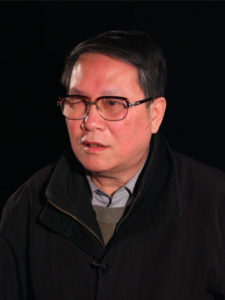
Xu XingXu Xing, born 1956 in Beijing, started his career as a novelist and writer. His publication Variation Without a Theme won him accolades at the Beijing University Art Festival and international acclaim and awards such as the Tucholsky Prize for Foreign Literature (Pen International) and “Order of the Chevalier des Arts et des Lettres” from the French Ministry of Culture for his translated work.

He has held fellowships and author-in-residence positions in Germany, France and the US. After turning to filmmaking, his documentaries were selected for film festivals garnering awards from Korea and the Awards Forum for Independent Documentary (AIF). His work has been widely shown in the US at Harvard, Yale & Columbia, and in Europe at Berlin, Rome & Aix-en-Provence a.o.

After each screening there will be a Q&A session with the director Xu Xing followed by more informal conversations during the drinks receptions

As seat numbers are restricted, please email info@confuciusinstitute.ac.uk to book your place to attend either or both evenings.


Prof Adam Smith – Origins of Writing Keynote: 20 May 6pm

“The Beginnings of Writing in China:
Managing Livestock and Anxiety”

The National Museum of Scotland holds the largest collection of inscribed ancient Chinese oracle bones (1800 fragments from c.1300 BCE) in Europe (the second biggest outside of Asia), donated by two Scottish missionaries in 1909.  A three day academic conference will take place in the University of Edinburgh at the end of which there will be a public lecture which will consider the early origins of writing in China.

Background

The emergence of literacy in a culture previously unexposed to writing is an exceedingly rare, but consequential event, one that has taken place at only a tiny handful of places and times. Northern China, circa 1300 BCE, of was one of those places and times. Archeological evidence for the beginnings of literacy in China is spectacular in its abundance, and arguably provides a more complete picture of the process than that from any other region.

Abstract

Records of divination inscribed onto cattle scapulae and turtle shells are the most numerous and best known examples of early Chinese writing. They document divination performed on a daily basis to address the sacrificial routines and personal anxieties of the Shang royal family. But these so-called ‘oracle bones’ are only part of the picture. Brush-written labels on stone and pottery objects, and inscriptions on cast bronze objects, are two other important strands of early evidence. Documents written on strips of bamboo or wood bound together with thread have not survived, but their role in maintaining registers of sacrificial livestock can be reconstructed from references to them in the ‘oracle bone’ texts. By combining these complementary lines of evidence, we can start to answer the question ‘How does writing begin?’

Biography

Adam Smith is an Assistant Professor in the Department of East Asian Languages and Civilizations at the University of Pennsylvania, and a curator in the Asian Section of the Penn Museum of Archaeology and Anthropology. His research is focused on the beginnings of writing and literate institutions in China, and the linguistic and palaeographic reconstruction of the earliest stages of the Chinese language.

Public lecture details

Friday 20th May 18.00-19.15 followed by a drinks reception
Confucius Institute for Scotland, Abden House, 1 Marchhall Crescent, EH16 5HP

Gender Statistics & Local Governance 24 May 5.30pm

Guest Lecturer Lanyan Chen from Nipissing University, Canada will talk on the topic of Gender Statistics and Local Governance in China on Tuesday 24th May at 5.30pm.

ABSTRACT

Gender statistics provide an essential tool to mainstream gender equality in policymaking through the recognition of gender differences in all fields of life. It is a legacy of feminist movements since the 1970s to bring forth recognition of challenges women face differently from men in order to effect substantive equality.

This talk identifies the lack of gender statistics in China’s statistical systems and its negative impacts on local policymaking based on the findings of a project carried out in three local districts of Tianjin. From a feminist political economy perspective, Lanyan Chen argues that gender statistics will not find its way into policymaking, which is a process in China built upon centralized statistical reporting systems that serve the senior governments more than local communities. It is her suggestion that policymaking is a site of contestation whereby community activists demand the use of gender statistics to assist policies to promote equality.

BIOGRAPHY

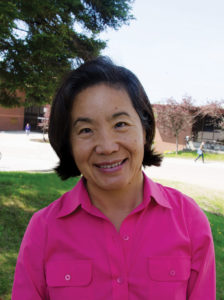
Lanyan ChenLanyan Chen, is an Associate Professor of Social Welfare and Social Development, holds a PhD in Sociology from the University of British Columbia and a Master’s in Communications from Simon Fraser University. She publishes in both English and Chinese and brings a perspective of feminist political economy to her areas of research.

Her publications in areas of gender issues and inequality, the women’s movement, health and welfare, and public policy, includes a book entitled Gender and Chinese Development: Towards an Equitable Society (Routledge, 2008), and many book chapters and journal articles in Feminist Economics, Development and Change and China Quarterly.

While her published research has mostly focused on China, she is increasingly doing research on these issues in Canada and other countries using comparative perspectives. As a researcher, she takes her role seriously in spreading knowledge and working with people to think of a way forward. This approach reflects her experiences with several United Nations appointments including the UNIFEM Gender Advisor for Northeast Asia based in Beijing from 1998 to 2003, a position where she was able to create change through projects, campaigns and mobilization of people and communities.

She has had numerous appointments as a Gender Expert, working on the design, implementation, and evaluation of large-scale projects and programmes in support of compliance to international human rights norms and standards. She also initiated situational analyses by way of surveys and field visits; interviews and focus groups; and led training workshops on participatory, action-oriented methodology (PAR); gender analysis; human rights norms and standards; gender statistics; social assessment; and survey design for projects.

Her most recent participation in the evaluation of the United Nations Population Fund country program in China is available here.

Gender Statistics and Local Governance in China
Business School Lecture Theatre 2
29 Buccleuch Place, Edinburgh, EH8 9JS

From: 5.30 till 7pm including Q&A
All Welcome
This lecture will be followed by a drinks reception

Prof Kai Vogelsang, 19 May Distinguished Lecture: 6pm

Getting the Terms Straight: Politics, State & Law in the Discourse of Chinese ‘Legalism’

‘Legalism’ is a stepchild of Chinese tradition. Long neglected by Chinese and Western scholars alike, it has until today not been properly understood. The burden of traditional terminology especially seems to have weighted down sinological scholarship and blocked inter-disciplinary approaches to the topic.

This talk will focus on some central terms of ‘legalist’ discourse – including ‘legalism’ itself – in an attempt to reach a clearer understanding of this part of Chinese tradition which is by no means a quantité negligéable.

PROFESSOR KAI VOGELSANG

vogelsangKai Vogelsang is professor of Sinology at the University of Hamburg. He studied Sinology and Economics in Hamburg and Taipei receiving a PhD in Hamburg (1997) and subsequently in Munich (2004). His fields of research are Chinese history of the pre-Qin period and the late 19th/early 20th centuries with a focus on conceptual history.

This is the third lecture in our 2016 Distinguished Lecture Series.The venue for the talk by Professor Kai Vogelsang is the Project Room, 50 George Square, Edinburgh, EH8 9JU from 6pm on Thursday 19 May 2016. Following on from the lecture and Q&A there will be a networking drinks reception.

All Welcome. No booking is required.

Fudan University credit bearing summer camp 4-15 July 2016

Shanghai’s Fudan University’s School of Economics is offer a two week credit bearing summer camp on Chinese Economy and Society.  Designed for students who wish to acquire comprehensive knowledge of China in the fields of economy, business and society the course comprises thirty-two 90 minute lectures delivered by top scholars from Fudan University, Shanghai Jiao-tong University, and Shanghai University of Finance and Economics (SHUFE).  Attendees will also take part in three company tours. The dates of the course are 4-15 July 2016 .

The application fee is 400RMB with a tuition charge of 10,000RMB inclusive of all programme activities plus lunch and coffee breaks on lecture days.A range of accommodation is on offer with prices ranging from around 100RMB to 300RMB per day.

Full details of the programme can be seen here via this flier SOE SUMMER CAMP.  Additionally you can review this Chinese Economy Society @ SOE FUDAN ppt.

CPD-Teaching Chinese in Scotland 2016

This free one day event for all involved or interested in the teaching of Chinese follows  saw a 50% increase in the number of registration for the successful 2015 conference rising from 94 to 142.

Taking place on Friday 24 June 2016 at 50 George Square, University of Edinburgh, the Second Annual Conference on Chinese Language Teaching in Scotland was jointly organised by the Confucius Institute for Scotland and Asian Studies in the University of Edinburgh.

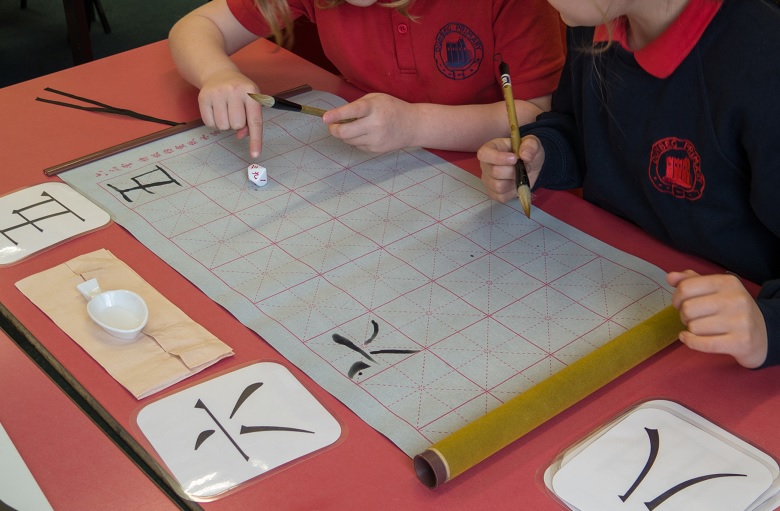
Among the topics were teaching Chinese to primary school pupils and effective methods to help students learn Chinese characters.

Today, there is a growing interest in learning Chinese in schools and demand for Mandarin is rising in the business community and universities.

“We are sure those who attended picked up a lot of new ideas for more effective ways of learning and the teaching of Chinese,” said Professor Natascha Gentz, Director of the Confucius Institute for Scotland, which is celebrating 10 years of culture, education and business links.

Professor Gentz, who is also Assistant Principal (China) at the university, added: “We hope that the conference can contribute to the further expansion and successful development of Mandarin as one of the suite of modern languages in Scotland.”

Please download a conference programme for further details of the workshops and speakers.

Zheng He-When the Dragon Ships Came Thurs 9 June 19.00

The Confucius Institute for Scotland in the University of Edinburgh, in association with SCEN, is delighted to bring to Edinburgh this award winning show from Karin Schäfer of Figuren Theatre blending puppetry, video and animation.

Tickets for the public show at 7pm on 9th June will be on sale from 6.30pm at the venue- Central Hall, West Tollcross. Advance ticket sales are available via the Queens Hall box office

With two free shows for school groups running at 10.30 and 13.00 the excitement about this show is building.  But for those not in school there is still an opportunity to see the show in a ticketed evening performance at 19.00- read on!

Zheng He

Zheng He-When the Dragon Ships Came relates the tale of the fantastic journeys of this famous Chinese explorer who with his fleet of more than 300 enormous ‘dragon ships’ sailed via Indonesia, India, and the Arabian Coast to Africa – almost 100 years before Columbus set sail for America. While every child in China knows the story of Zheng He’s travels, here, his adventures remain largely unknown.
Zheng He Tea

This production has won many plaudits for its innovative set design which features interaction between the screen and the action on stage. The animated films, video clips, shadow images and masks form a constantly changing visual narrative while the multi-lingual audio and musical score ensure that audience members are fully engaged by the production

Click here to see a short video extract.

Zheng He Screen

The evening show is open to the public and will take place from 7pm-8pm in Central Hall, West Tollcross, EH3 9PB.

Doors will open at 6.30pm.  There is no age restriction on this production but age 7+ is recommended.

Tickets are £5 per single ticket or £15 for a family of 4
(2 adults+ 2 x 12yrs or under OR 1 adult + 3 x 12yrs or under).

Bookings for this event at Tollcross Central Hall is through the Queen’s Hall Box office.You can book in any of the following ways

Online: 24hrs a day at www.thequeenshall.net

By telephone:   (0131) 668 2019.
Telephone bookings operate from 10am – 5pm Monday to Saturday.  Credit & debit card bookings are accepted along with customer enquiries on the above number.

In person: The Box Office is open from 10am – 5pm Monday to Saturday on non-concert evenings, or until 15 minutes after the start of a Queen’s Hall performance.

By post: Postal bookings are accepted with cheques made  payable to “The Queen’s Hall Box Office”. Postal bookings should be sent to The Queen’s Hall Box Office, Clerk Street, Edinburgh, EH8 9JG.

By fax:  Bookings can be accepted by fax if card details for payment are included. The fax number for the Queen’s Hall is: (0131) 668 2656.

Schools which wish to send a group of students (not necessarily students studying Mandarin) should in the first instance call us on 0131 662 2180 or email info@confuciusinstitute.ac.uk.

Distinguished Lecture Podcasts: Prof Qin Hui & Prof Yuri Pines

For those who missed the February or March 2016 Distinguished Lectures by Professor Qin Hui, Tsinghua University and Professor Yuri Pines we are pleased to provide these podcasts.

Prof Qin Hui: “Confucian Values and English Constitutional Monarchy: Historical Routes of China’s Modernization”

Prof Yuri Pines, “Empire without Emperors? Rethinking Aspects of China’s Modernisation”

SYNOPIS FOR PROF QIN HUI

When “cultural differences” and “civilizational clashes” are popular discourses in our intellectual thinking today, it is hard to imagine Confucian values have any affinity with Western democratic values and institutions. When Chinese Confucian scholar/officials first encountered the West in the latter half of the 19th century, however, they identified Western institutions such as English Constitutional Monarchy as very much representing Confucian values—in its true and authentic sense.

This lecture will highlight the enthusiastic embrace of Western democratic institution by a host of late Qing Confucian scholar/officials, from the first Chinese ambassador to Britain Guo Songtao (1818-1891) to Zhang Shusheng (1824-1884), a powerful Qing official whose will was for China to adopt Western democratic policy as the “foundation” for a Confucian state. They saw, for instance, the “loyalty” the English people expressed towards their Queen/King was most sincere precisely because they were detached from power. Indeed, the decency of the English constitutional monarchy ignited the dormant “ancient Confucianism” in these late Qing Confucian scholar/officials who allied themselves with Western democratic institutionalism to fight against the age-old enemy of Confucianism: the notorious and cruel dictator the First Emperor of Qin (260-210 BC).

But there was also a strong force in modern Chinese history that yearned for the wealth and power of the nation through a modern-day First Emperor facilitated by an alliance of the traditional “Legalist” thought and radical authoritarian ideology from the West. Confucianism, in any case, had not been in that company.

Prof Qin HuiProfessor Qin Hui 秦晖 is Professor of History at Tsinghua University, China. His research has covered several fields in economic history, social history and history of ideas. He has published more than twenty books including Fields and Garden Poetry and Rhapsodies (田园诗与狂想曲), Ten Treatises on Tradition (传统十论), Out of the Imperial System (走出帝制), Common Baseline (共同的底线), Issues and Isms (问题与主义), Revelations from South Africa (南非的启示).
SYNOPIS FOR PROF YURI PINES

China’s republican revolution of 1911 is overwhelmingly considered – notwithstanding ongoing debates over its nature, course, and outcomes-a necessary and positive step on the country’s path toward social and political “modernization.” Yet if viewed in the context of traditional Chinese political culture, the haphazard abolition of the millennia-old monarchic form of rule appears as less prudent. In this talk Prof Pines addressed the short and long-term repercussions of China’s transformation from a monarchy into a republic and reassessed its political and cultural consequences. This renewed analysis of the advantages and disadvantages of China’s abolition of monarchic rule may be of interest to historians of traditional and modern China and also of some relevance to those concerned with China’s ongoing attempts to redefine its cultural image.

yuriBorn in Kiev, Ukraine, in 1964 Yuri Pines works at the Hebrew University of Jerusalem. His research focuses on political thought of pre-imperial (pre-221 BCE) China and on the political culture of imperial China. He is also involved in studies of political, social, and religious history of pre-imperial and early imperial (Qin) China and of early Chinese historiography.
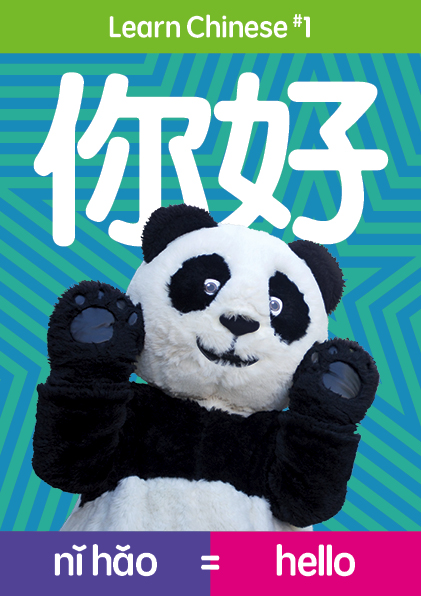
Spring Term language classes – week 1 underway

Join one of our friendly classes this Spring term with our excellent teachers from Fudan University in Shanghai. With up to 20 different levels of language courses running Monday to Thursday evenings from 6pm till 8pm there should be a class to suit you.  Beginner level classes run each evening so book now to start learning.

All classes start w/b 18 April 2016 and take place in the Confucius Institute for Scotland at Abden House, 1 Marchhall Crescent, EH16 5HP.

Hello

If you are unsure what level of class might best suit you please get in touch with us. We will arrange a meeting with one of our teachers the week before classes start to assess the best class for you.

Click here for full details of the courses on offer from April-June 2016.

If you have any questions do get in touch. Call on 0131 662 2180 or email otherwise simply register online for the course you want to take.

HSK Exam 02 Dec 17-online registration by 2 Nov

Registration is now open for the Decemer HSK Exam Diet.  The registration deadline for the online exam is Thursday 2 November.  The online exam has a later deadline of Thursday 16 Nov 2016.

We recommend that  only candidates who are proficient in using a keyboard to input characters should apply for the online exam.

For more information on the HSK and HSKK and to register please visit our main HSK page here.

Win a trip to Shanghai in Writing/Photography Contest

Have you been to China? Did you visit Shanghai?  Even if you have only read a book about Shanghai or China, you can still can take part in a writing or photography contest to win a trip to China.

Shanghai Get Together is the 4th Writing and Photography Contest run by Shanghai Library which offers first and second prize winners the opportunity to win a trip to China.Third prize winners will receive specially made gifts.

Applications for this contest is now open to people from overseas. Simply submit a short article or photograph (or both) to share your impressions, experiences and stories.

This competition is run by Shanghai Library. For entry requirements and detailed information, please visit Shanghai Library web page here.

Shanghai Library provide our Institute with a selection of books on an annual basis under their Window of Shanghai programme.  In previous competitions we have had a third prize winner!

Good Luck!

city scene

Office closed for Good Friday 19 April 2019

Please note that our office will be closed for a summer break, from 02 – 06 August. We will re-open on Monday 09 August.

Our Autumn term will start from 27 September. Full timetable can be found HERE.

Asian Studies Seminar: Philip Clart, 12 February 2019, 6-8pm

The second Asian studies seminar series of this semester take place on Tuesday 12 February in Project Room (1.06), 50 George Square, University of Edinburgh, EH8 9JU

In the Taiwanese context, divination refers to a set of different techniques for obtaining supernaturally sourced knowledge, ranging from simple yes and no answers revealed by the dropping of so-called divination blocks to extended dialogues between humans and deities through the services of an entranced spirit-medium. This presentation introduces a new database of records, spanning from the early 19080s to the present, of questions posed by believers to the deities of a central Taiwanese spirit-writing cult, and of the answers received by them. I will endeavour to demonstrate how such primary data can be used to study folk beliefs and their social contexts.

Philip Clart is Professor of Chinese Culture and History at the University of Leipzig, Germany. He received his Ph.D. in Asian Studies from the University of British Columbia, Canada, in 1997; prior to coming to Leipzig he taught at the University of British Columbia (1996-1998) and at the University of Missouri-Columbia (1998-2008). He is the editor of the Journal of Chinese Religions and co-editor (with Elisabeth Kaske) of the monograph series Leipziger Sinologische Studien. His main research areas are popular religion and new religious movements in Taiwan, religious change and state/religion relations in China, as well as literature and religions of the late imperial period (10th-19th c.). His monographs include Han Xiangzi: The Alchemical Adventures of a Daoist Immortal (University of Washington Press, 2007) and Die Religionen Chinas (Vandenhoeck & Ruprecht, 2009). He has edited or co-edited Religion in Modern Taiwan: Tradition and Innovation in a Changing Society (University of Hawai‘i Press 2003), The People and the Dao: New Studies of Chinese Religions in Honour of Daniel L. Overmyer (Institute Monumenta Serica, 2009), Chinese and European Perspectives on the Study of Chinese Popular Religions (Boyang Publishing, 2012), Religious Publishing and Print Culture in Modern China: 1800-2012 (De Gruyter, 2015), and Hundert Jahre Ostasiatisches Institut an der Universität Leipzig (Leipziger Universitätsverlag, 2016).

All Welcome!


China’s Mobile Library takes to the road

Interest in the Royal Zoological Society of Scotland’s (RZSS) two giant pandas, Tian Tian and Yang Guang, extends well beyond Edinburgh Zoo’s home base in Corstorphine.

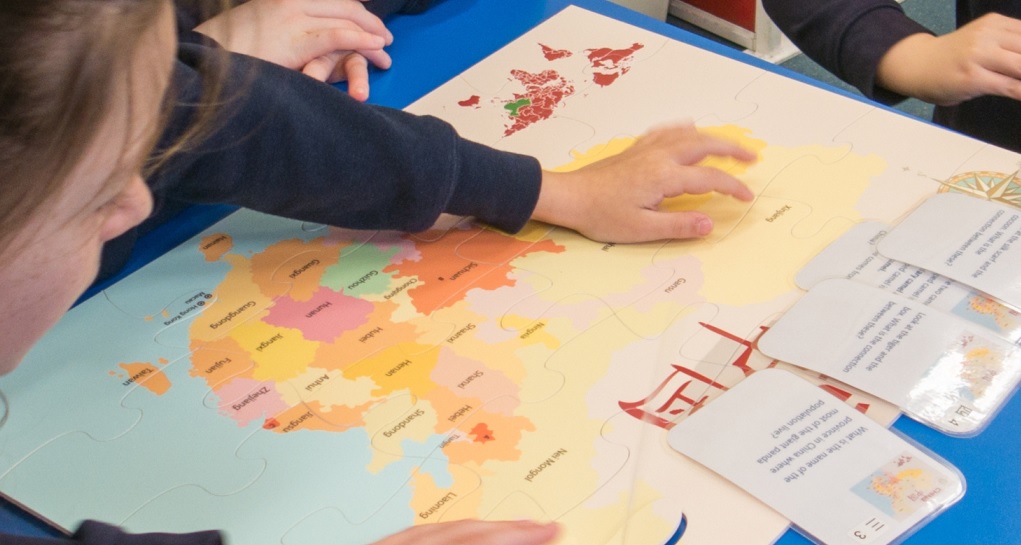
The pandas are here on a ten year loan and during their extended stay in Scotland, Sandie Robb, Senior Education Officer for RZSS has developed a much lauded outreach programme for Scottish schools. This year, our Institute, is working  to extend the reach of her work through a special programme of CPD and pupil education. As part of the overall ‘Beyond the Panda’ programme, Sandie Robb is now travelling around the country taking the ‘China Mobile Library’ to schools not only in the central belt but to the the Highlands and,the Islands as well as the Lowlands and Borders.

Mobile Library

In January, Fife school, Milton of Balgonie Primary, was the first in 2016 to welcome Sandie and her ‘panda box’.  The contents of the box include games, jigsaws and other activities to stimulate learning and classroom discussion. The materials introduce age appropriate Chinese language elements.

The first two months of the year have seen the Mobile Library visit snowy Newtonmore for a period giving primary schools there and in Aviemore, Alvie, Kingussie and Gergask the chance to start to start to explore the habitat and habits of Giant Pandas.

Mobile Library

CPD sessions for teachers are also part of the package which ensure that staff within participating schools have the opportunity to derive maximum return from the progarmme.  There is also the option to buy a ‘Panda Box’ for a school to enable staff to continue to stimulate the pupils using the materials which, as well as being hugely enjoyed by the students, have been developed to match Curriculum for Excellence outcomes.

With East Dunbarton, East Ayrshire and Cambuslang also enjoying visits, the mobile library will be heading to more schools throughout the year.

For request a visit, or for more information and resources please visit the Beyond the Panda website.


Language Show Live SECC Glasgow: 11&12 March

The five Confucius Institutes of Scotland will come together to exhibit at the Language Show Live Scotland on 11 & 12 March at the SECC in Glasgow. Our stand no is 440.

With free educational seminars, language taster sessions, varied cultural activities and performances the exhibition will appeal to all those interested in language learning either professionally or personnally. Please visit the Language Show Live Scotland website for more information.

With around 100 exhibitors the show will give parents, pupils, teachers and anyone interested in language learning a great opportunity to find out what is going on in the languages field.

Coordinated by the Confucius Institute for Scotland’s Schools (CISS) which is based within SCILT in the University of Strathclyde, CISS staff have been working on the evolution of the exhibition as well as the programme of seminars and entertainment to ensure that Chinese language is well represented at the show.

Low Carbon Development, China 22 March 2016

Dr Yong Geng, Dean of the School of Environmental Science and Engineering at Shanghai Jiao Tong University will visit Edinburgh and deliver a morning lecture on 22 March 2016 at the Edinburgh Centre for Carbon Innovation. Dean Geng will briefly present the key findings of his research in the area of circular economy and low carbon development in order to identify possible opportunities for collaboration and partnership with colleagues in Scotland. 

This is a FREE event running from 08.30am-10.0am but places are limited.  For more details please contact Siobhan Dunn at ECCI.

Biography

Dr Yong Geng is a Dean of the School of Environmental Science and Engineering at Shanghai Jiao Tong University – one of China’s oldest and most prestigious universities. Shanghai Jaio Tong recently signed a Memorandum of Understanding to work with the University of Edinburgh. The agreement is the first of its kind between the two institutions. The relationship will create opportunities for partnerships drawing on the research expertise and innovation of Edinburgh’s School of Geosciences and the Edinburgh Centre for Carbon Innovation (ECCI). Dean Geng holds a doctorate in Chemical Engineering and is a Distinguished Professor in the School of Environmental Science and Engineering. He is the recipient of numerous and awards and honours and he sits on the boards of many international scientific committees and international journals.

Dean Geng will speak about his primary research area in the circular economy and low carbon development in China. This is a rare opportunity to hear one of China’s preeminent scholars in this area. If you would like to attend please register via the ling below or contact Siobhan Dunn at siobhan.dunn@ed.ac.uk.

DATE: 22 March 2016
TIME: 8:30am to 10:00am
VENUE: Edinburgh Centre for Carbon Innovation