Asian Studies Seminar Series 2nd March

The second of the three Chinese Studies Research Seminars will take place on Wednesday, March 2nd 2016 in David Hume Tower, LG.08 from 17.00-19.00

Dr Sabrina Yu (Newcastle University)
Going Back to the Hometown: A New Root-searching Movement in Contemporary Chinese Independent Cinema

It has been critically recognised that there was a root-searching movement in the 1980s in China, immediately after the Cultural Revolution, firstly in literature, then in film, exemplified by some Fifth Generation Directors’ works. This paper aims to outline a new root-searching movement emerging in Chinese independent films in the past ten years or so.

It will scrutinise this new trend within its social, cultural and filmic context in contemporary China. The speaker will argue that this new root-searching movement is different from the previous one in that root-searching is not just a subject matter or a nostalgic sentiment, but also manifested as new film aesthetics and fresh approaches to filmmaking, which have been subtly changing the landscape of contemporary Chinese cinema. This new trend will also be discussed in relation to the challenges that independent filmmaking in current China is facing, such as the lack of financial support, the restrictions on exhibition and distribution and the scarcity of audience.

Third Talk 16th March 2016

The third talk of the series this semester will take place on March 16th and will be given by Dr Liang Hongling (University of Glasgow) on “The Enlightenment, Sino-French Institute and Tel Quel: Looking at Three Moments in Sino-French Knowledge Dynamics”.

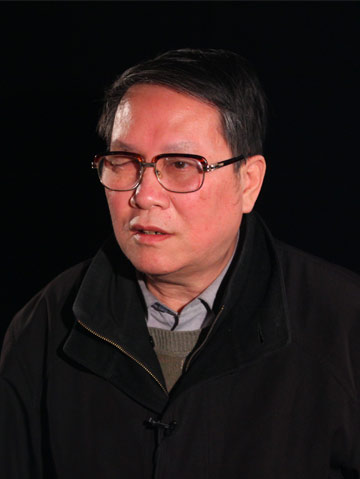
Distinguished Lecture Prof Qin Hui, Tsinghua, 10 Feb 6pm

Join us for the opening lecture in our 2016 Distinguished Lecture Series when prominent public intellectual Prof Qin Hui of Tsinghua University will consider “Chinese Culture and its Modernisation”.

Confucian Values and British Constitutional Monarchy:
Historical Routes of China’s Modernization

When “cultural differences” and “civilizational clashes” are popular discourses in our intellectual thinking today, it is hard to imagine Confucian values have any affinity with Western democratic values and institutions. When Chinese Confucian scholar/officials first encountered the West in the latter half of the 19th century, however, they identified Western institutions such as the British Constitutional Monarchy as very much representing Confucian values—in its true and authentic sense.

This lecture will highlight the enthusiastic embrace of Western democratic principles by a host of late Qing Confucian scholar/officials, from the first Chinese ambassador to Britain, Guo Songtao (1818-1891) to Zhang Shusheng (1824-1884), a powerful Qing official whose will was for China to adopt Western democratic policy as the “foundation” for a Confucian state. This group saw, for instance, the “loyalty” people expressed towards the Queen or King was most sincere precisely because the monarch was detached from power. Indeed, the decency of the British Constitutional Monarchy ignited the dormant “ancient Confucianism” in these late Qing Confucian scholar/officials who allied themselves with Western democratic practice to fight against the age-old enemy of Confucianism: the notorious and cruel dictator the First Emperor of Qin (260-210 BC).

But there was also a strong force in modern Chinese history that yearned for the wealth and power of the nation through a modern-day First Emperor facilitated by an alliance of the traditional “Legalist” thought and radical authoritarian ideology from the West. Confucianism, in this instance, was a notable exception.

Prof Qin HuiProfessor Qin Hui 秦晖 is Professor of History at Tsinghua University, China. His research has covered several fields in economic history, social history and the history of ideas. He has published more than twenty books including Fields and Garden Poetry and Rhapsodies (田园诗与狂想曲), Ten Treatises on Tradition (传统十论), Out of the Imperial System (走出帝制), Common Baseline (共同的底线), Issues and Isms (问题与主义), Revelations from South Africa (南非的启示

Please note that this talk will take place in Chinese.

Wednesday 10th February 2016
18.00-19.30
Lecture Room 2, University of Edinburgh Business School, 29 Buccleuch Place, EH8 9JS

ALL WELCOME, NO BOOKING REQUIRED

Chinese Studies Seminar Series 27 Jan 16

This semester there are three Chinese Studies seminars planned the first of which will take on Wed 27th January

January 27 17:00-19.00
Dr Marjorie Dryburgh (University of Sheffield)
Visual Histories of a Northern City: In Search of a People’s Past

This talk will take place in the University of Edinburgh 50 George Square, Lecture RoomG.02.

The second talk of this semester is outlined below.  Further info on venue and time will be confirmed nearer the date.

Wednesday, March 2  Time and Venue TBC
Dr Sabrina Yu (Newcastle University)
Going Back to the Hometown: A New Root-searching Movement in Contemporary Chinese Independent Cinema

It has been critically recognised that there was a root-searching movement in the 1980s in China, immediately after the Cultural Revolution, firstly in literature, then in film, exemplified by some Fifth Generation Directors’ works. This paper aims to outline a new root-searching movement emerging in Chinese independent films in the past ten years or so. It will scrutinise this new trend within its social, cultural and filmic context in contemporary China. I argue that this new root-searching movement is different from the previous one in that root-searching is not just a subject matter or a nostalgic sentiment, but also manifested as new film aesthetics and fresh approaches to filmmaking, which have been subtly changing the landscape of contemporary Chinese cinema. This new trend will also be discussed in relation to the challenges that independent filmmaking in current China is facing, such as the lack of financial support, the restrictions on exhibition and distribution and the scarcity of audience.

The venue and time for the  final talk in this semester’s Chinese Studies  seminar series will take place on Wednesday, March 16.   It will be given by Dr Liang Hongling (University of Glasgow) on “The Enlightenment, Sino-French Institute and Tel Quel: Looking at Three Moments in Sino-French Knowledge Dynamics”.

Listen again or catch up2015 lecture podcasts

Here on this page you will find a number of podcasts and videos of previous events run by our Institute.

Lord Green: October 2015
China & Europe

Steven Green,  former chair of HSBC has a career spanning almost five decades. In this talk he compares and contrasts Europe and China from Confucius to Aristotle to the present day. For more information on this speaker and the talk please click here.


Shen Dingli October 2015
China’s Peaceful Rise: Challenges & Opportunities

Deputy Dean of  the Institute of International Studies at Fudan University and former advisor to Kofi Annan, Shen Dingli research and publications focus mainly on China-US security relations.For more information on this speaker and the talk please click here.


WAGnet Conference: September 2015
Memory, Gender & Change in China

A day long symposium on the above with contributions from a range of speakers on a variety of topics.  For more information on this event and the topics covered please click here.

KEYNOTE and PANEL 1

PANEL 2 and PANEL 3


Dr Andreas Guder, March 2015
Chinese as a Foreign Language in Germany

Dr Andreas Guder is based in Freie Universitat, Berlin where he is head of Chinese Language Study and Chairman of the Association of Chinese Teachers in German Speaking Countries. For more information on this speaker and his talk please click here.


David Shambaugh: March 2015
China at the Crossroads? Major Reform Challenges

David Shambaugh is Professor of Political Science & International Affairs and founding Director of the China Policy Program in the Elliott School of International Affairs at George Washington University. For more information on this speaker and his talk please click here.


Wang Ban: June 2015
Where Have All the villages Gone?

Wang Ban is the William Haas Professor in Chinese Studies and a board member of the Confucius Institute at Stanford University. His research focuses on Chinese and comparative literature, and additionally  he has written on English and French literatures, psychoanalysis, international politics, and cinema. For more information on this speaker and his talk please click here.


Zhang Longxi: April 2015
Reconceptualising China in our Time

A leading scholar in East-West cross-cultural studies Zhang Longxi holds an MA from Peking University and a Ph.D. from Harvard. He is currently Chair Professor of Comparative Literature and Translation at City University Hong Kong. For more information on this speaker and his talk please click here.


Lin Zhaohua: August 2013
Shakespeare in China

Following the staging of The Tragedy of Coriolanus at the Edinburgh International Festival by China`s best known director of modern drama, LIN Zhaohua, our Institute hosted an afternoon conversation session with him in partnership with the British Council and EIF in which he discussed this production and Chinese modern theatre.

Jim O Neill, June 2012
China and Its Place in the World

As chairman of Goldman Sachs Asset Management (GSAM) Jim was involved in helping guide all aspects of GSAM’s businesses around the world. One of the world’s most famous economists with over ten years experience at Goldman Sachs, Jim O Neill has a global reputation as a famous economist. Creator of the acronym BRICs, he has published extensively on the emergence of the BRIC economies -Brazil, Russia, India and China This video extract was recorded in June 2012 on the topic of ‘China and Its Place in the World’.

For more information on this speaker and his talk please click here.


Stephen Perry: May 2012
Everyone should understand China

Stephen Perry has been involved with China since his earliest days as his father was the leader of the Icebreaker group to China in 1953 which restarted UK-China trade relations just one year after starting up the business in which Stephen is today Managing Director, London Export Corporation.  He is also Chairman of the 48 Group Club. For more information on this speaker and his talk please click here.


Adam Dupre: April 2012
China/Scotland: the global context

Adam was the founder of China Company Research Services and the opening speaker in the Institute’s Business Lecture Series – China, Scotland and the World. An ex officio Vice President of the 48 Group Club he initiated earlier visits to Scotland by the Chinese Ambassador and the Chinese Minister of Education. For more information on this speaker and his talk please click here.

China-A Science & Technology Superpower? 25 Nov 3.30pm

Join us when Prof Erik Baark from Hong Kong University of Science & Technology poses the question China – A Science & Technology Superpower?

With the rapid growth of Chinese investments in science and technology, and the expansion of outputs in terms of scientific articles, patents, and technological capabilities, some observers have predicted that China is on its way to becoming a technological superpower. This prediction is naturally based on the rapid developments in the input of R&D investment and output of scientific publications and patents that have taken place in China during the recent decades. But what does the concept of a scientific and technological superpower imply? In this talk, Erick Baark will discuss several interpretations of the concept of superpower and provide a preliminary assessment of key trends that have been seen as the promise of China’s emerging status. In his conclusion,he proposes that if, indeed, China is becoming an S&T superpower, one can hope that it will become a different type of superpower.

Erik BaarkErik Baark is Professor at the Division of Social Science and the Division of Environment at the Hong Kong University of Science & Technology. He completed a PhD at the University of Lund (1986) and a Dr.phil. at the University of Copenhagen (1998). His primary research interests are related to innovation systems and science and technology policy in China and other East Asian countries. His research on China includes analysis of information systems and IT development and high technology entrepreneurship during recent policy reforms. He has also published extensively on innovation in Hong Kong and the Pearl River Delta. He has published edited volumes and monographs, including Lightning Wires: Telegraphs and China’s Technological Modernization 1860-1890 (Greenwood Press, 1997). He has also published articles in leading international area studies journals such as The China Quarterly and innovation research journals such as Research Policy and the International Journal of Technology Management.

Lecture: China – A Science & Technology Superpower?
Speaker: Prof Erik Baark, Hong Kong University of Science & Technology
Date: Wednesday 25th November
Time: 3.30-5.00
Venue: Room LT2, University of Edinburgh Business School, 29 Buccleuch Place

For further information contact: X.Shen@ed.ac.uk

Jointly organized by the Institute for the Study of Science, Technology and Innovation and The Confucius Institute for Scotland in the University of Edinburgh. http://www.issti.ed.ac.uk/

Rising China and Global Impact13 Nov 3.15pm

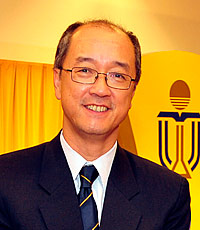
Professor Tony Chan, President of Hong Kong University of Science and Technology, Asia’s No 1 University for three years in a row, will give a guest lecture on the topic of Rising China and Global Impact.

Globalisation, which calls for responses from many different sectors and stakeholders around the world, brings opportunities along with challenges. As such, rising China in the global arena is playing an increasingly important role in addressing the global imperative and shaping international agenda.  In the global marketplace, no champion can excel on its own.

How does one make sense of this ‘new’ internationalisation?  How does a university find its place in the midst of global cross currents? In the globalised context, which is always in flux, how do we go beyond traditional confines to soar as global players with global impact?

Biography

Tony ChanProfessor Tony F Chan assumed the presidency of HKUST in Sept 2009.  Prior to this appointment he was Assistant Director of the the Mathematical and Physical Sciences Directorate at the U.S. National Science Foundation (NSF), which is the largest directorate at NSF.

Professor Chan’s scientific background is in Mathematics, Computer Science and Engineering. He received his BS and MS degrees in Engineering from the California Institute of Technology (Caltech) and his PhD in Computer Science from Stanford University. He pursued postdoctoral research at Caltech as Research Fellow, and taught Computer Science at Yale University before joining the University of California at Los Angeles (UCLA) as Professor of Mathematics in 1986. He was appointed Chair of the Department of Mathematics in 1997 and served as Dean of Physical Sciences from 2001 to 2006. He also holds honorary joint appointments with the University’s BioEngineering Department and the Computer Science Department.

Event Details

Friday 13 November 2015
3.15.-4.00pm
Lecture Theatre 2, Appleton Tower, 11 Crichton St, Edinburgh, EH8 9LE

For more information on HKUST please click here.

Farmland for Farmers24 Nov 15 6.30pm

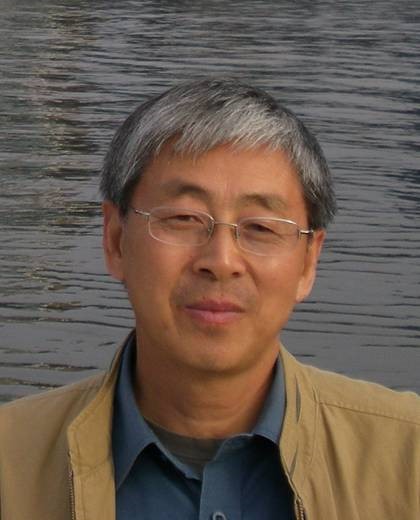
We are delighted to welcome Dong Zhenghua, formerly Distinguished Professor of Humanities at Peking University and now Professor of Chu Hai College for Higher Education, Hong Kong as the sixth speaker in our Distinguished Lecture Series 2015. His talk is entitled Farmland for Farmers: Problems of Large-scale Enclosure of Farmland in China.

Synopsis

One key question in today’s China is how to protect the farmers’ farmland? Under China’s ‘collective farmland ownership’ system, ultimate ownership of land is difficult to determine. With a growing economy, demand for land also grows.

Local government and real estate companies, can all too easily requisition land in the name of public demand with minimal compensation to the farmers. Conversely there is an increasing need for more agricultural activity.

At present there is a danger of large-scale enclosure of farmland becoming an acute issue and land related disputes being exacerbated. Is the solution to confer peasant families with perpetual rights under the Constitution? What would the impact of such a policy be and is there a way ahead which will treat individuals fairly and address the conflicting demands?

Biography

Dong ZhenghuaDong Zhenghua, former Director of the Centre for Modernization Studies (1999-2014) and Distinguished Professor of Humanities (2012-14) at Peking University, is currently a Professor  at Chu Hai College for Higher Education, Hong Kong.

His publications on agrarian problems include

  • Farmers onto Modernity (2014);
  • Nanjie Village: a Market Oriented Collective (Equity, Exclusion and Liberalization: a debate among historians-Papers of the 1996 SEPHIS workshop, Zanzibar);
  • Reserve the Land for Family Farming: On the Use of Farmland and the Future of the Peasantry in China (Global Capitalism and the Future of Agrarian Society, 2012);
  • Does China Need to Develop Agrarian Capitalism? (Chinese Studies in History, vol. 47, no.2, Winter 2013-14. M.E. Sharpe, Inc.)

Event Details

This talk will take place in the lower ground level lecture theatre LG.11 of the David Hume Tower, University of Edinburgh, EH8 9JY from 6.30pm.  A drinks reception will follow.  All welcome


Chinese Studies Seminar Series Semester One

This term the Chinese Studies seminar series features three visiting speakers on 21 October, 4 November and 18 November. All seminars will take place at 50 George Square from 15.00-17.00 in either G.05 or G.06.   The next lecture is on Wednesday 4 November.

Wednesday 4 November G.05 : 17.00-19.00

Dr Gerda Wielander (University of Westminster)
Happiness in recent Chinese socialist discourse – has Ah Q become a role model?

Happiness and prosperity have been core to Chinese socialist thinking from its inception. The Revolutionary Alliance Programme of 1905 used the term fuzhi to express its aspirations for a new society, a term most recently reintroduced by Xi Jinping in 2013. Socialism has never just been an aspiration to prosperity and redistribution of resources; it has always also held the promise of a new society, which would bring spiritual as well as materialistic transformation. In psychological terms, this anticipated transformation was built on the concept of “revolutionary spirit” (Larson 2009).

In this talk I argue that the emphasis on happiness we see in Chinese political discourse today ties in with the renewed emphasis on socialist values. It also highlights the ideological dilemma the party is facing as a ruling party which continues to espouse visions of ‘groundbreaking changes’ and future utopian societies while at the same time trying to elicit quiet contentment from all, including the most disaffected, by focusing their minds on seeing the glass half full. While adopting the proper spirit remains a key characteristic of subjective feelings of happiness, what exactly constitutes the proper spirit has changed from revolutionary optimism to something more akin to Ah Q’s “spiritual victory” method.

Gerda Wielander is Reader in Chinese Studies and Head of Modern Languages and Cultures at the University of Westminster, London. She obtained her Masters and PhD degrees from the University of Vienna with theses on Liang Qichao’s historiography (MA) and the contemporary Chinese language press in Malaysia (PhD). Her main research interest lies in the link between the personal and spiritual to wider social and political developments in modern and contemporary China. She is the author of Christian Values in Communist China (Routledge 2013) as well as several journal articles and book chapters. She is currently working on an interdisciplinary edited volume with the working title Perspectives on Chinese Happiness.

Wednesday 18 November G.06

Dr Phillipa Lovatt (University of Stirling)
Sound Music and Memory in JIa Zhangke’s ‘Hometown Trilogy

In Jia Zhangke’s ‘Hometown Trilogy’ the complex diegetic soundscapes, which are often recorded using the documentary method of ‘direct sound’, are represented as ‘occupied’ spaces: acoustic realms that are densely layered with the competing discourses of reform-era China. This paper explores how this experience of lived space during the period of China’s rapid transformation in the years following the end of the Cultural Revolution is articulated through sound and music. Through detailed analysis of particular scenes in Xiao Wu (1997), Platform (2000), Unknown Pleasures (2002) and his first student film Xiaoshan Going Home (1995), the paper will discuss how the layering of acoustic space within the films communicates the ways in which social and personal memories are connected by establishing both the atmosphere of an era within the diegetic space of the film through music, radio or television broadcasts for example, and by setting the (sometimes conflicting) emotional tone for each scene.

Wednesday 21 October G.05 – Now completed

Dr Charlotte Goodburn (Kings College, London)
Rural-urban Migration, Citizenship and China’s 2014 hukou reforms

In July 2014 the State Council announced ground-breaking hukou reforms, abolishing the urban/rural distinction that has existed since the 1950s. Much scholarship on citizenship in China, influenced by Dorothy Solinger’s important work, has focused on urban versus rural hukou as defining a binary system of unequal citizenship, privileging urbanites and denying genuine membership to rural people. Rural-urban migrants are in the worst position of all since, despite making up a third of China’s urban population, they are often unable to access urban state resources, including education, healthcare, housing schemes and social welfare.

Based on this picture, we might expect the 2014 hukou reform to have an equalising effect. However, this paper draws on the author’s research in Shenzhen and on other work on rural-urban migration to argue that, in fact, citizenship statuses are more complicated than Solinger’s model implies. In particular, the distinction between local and non-local, interpreted differently in cities of different sizes and now enshrined in the 2014 hukou reforms, creates a hierarchy of citizenship statuses with varying impacts on migrants of different ages, genders and areas of origin. Rather than moving towards universalization of Chinese citizenship rights, then, the current trajectory is actually one of increased citizenship differentiation.

The paper concludes by proposing an alternative theoretical model of Chinese citizenship, based on recent literature on international migration and citizenship. Drawing on concepts such as “probationary” citizenship, “localised” citizenship and “undocumented” migrants, it suggests a more nuanced way of thinking about citizenship and rural-urban migration in China.


Prof Shen Dingli, Fudan University: 29 Oct 15-6pm

As a distinguished scholar we are delighted to host Prof Shen Dingli, Deputy Dean of the Institute of International Studies at Fudan University to deliver a lecture on China’s Peaceful Rise: Challenges & Opportunities.

Synopsis

China’s rise certainly brings more opportunities to the world: increasing import of goods and services; and increasing export of tourist purchasing power, to name a few.  In terms of soft power, China is rapidly investing on its green energy sector and collaborating on climate change.  It is a major force of international combat against terror and pandemic diseases.  It is more visible on UN peacekeeping and disaster relief missions abroad.  Meantime, its rise does alter the world balance of power.  China’s rising strength of export and investment brings it more competence in manufacturing and international finance.  Its land and maritime Silk Road program offers the prospects of a better connected Eurasian continent.  Its ambition on the global commons has yet to reconcile with the concerns of the others.  This lecture will address the aforementioned issues, analysing China’s policy contour and its regional impact, especially on its relations with the neighbours and the United States.

BIOGRAPHY

Professor Shen DinliProfessor Shen Dingli is Deputy Dean of  the Institute of International Studies at Fudan University.  His research and publications focus on China-US security relations; regional security and international strategy; arms control and non-proliferation; foreign and defence policy of China, and the US. He received his PhD in physics from Fudan in 1989 and from 1989 to 1991 he engaged in arms control studies at Princeton University. In 1996 he was awarded Eisenhower Fellowship. In 2002 he was invited by Kofi Annan the then Secretary General of the United Nations to advise him on strategy planning for his second term.
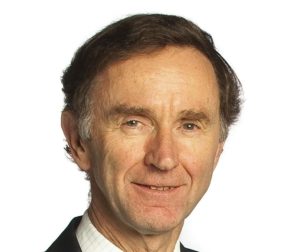
Currently he also serves as Vice President at several academic associations, including the Chinese Association of South Asian Studies, Shanghai Association of International Studies, Shanghai Association of American Studies, Shanghai UN Research Association and Shanghai Public Policy Association.

Essential Information

Thursday 29th October 2015 6pm-7.30pm
Project Room 1.06
50 George Square
EH8 9JY

This lecture is part of the Confucius Institute for Scotland Distinguished Lecture Series in which experts and scholars on China and Chinese culture are invited to give a lecture on their chosen topic.

It is also part of the Discover Day programme organised by Fudan University, the Chinese university partner for the Confucius Institute for Scotland.

“China & Europe”Lord Stephen Green:15th Oct

Join us on Thursday 15th October when Lord Stephen Green, former chair of HSBC, will deliver a talk with the intriguing title “China and Europe, from Confucius and Aristotle till now: Old Histories, New Understandings”.

What do China and Europe have in common? And what sets them apart? In this fascinating talk Lord Stephen Green fleshes out the tensions and misunderstandings between these two strikingly different cultures, from Confucius to Aristotle to the present day. China’s economic might globally is deeply intertwined to its fascinating cultural fabric – and an enlightening lens to understanding where this global giant stands today. For Europe these are soul-searching times, as it enters the 21st century trying to re-define its common identity and getting its voice heard in a world of emerging great powers.

Lord Stephen Green

Stephen GreenLord Green has a career spanning nearly five decades in the banking industry and politics and is a published author of books covering topics as diverse as Christianity and capitalism, and the rise of Germany as an economic powerhouse. His latest title looks at European identity, and the role it can play in a 21st century of emerging global giants.
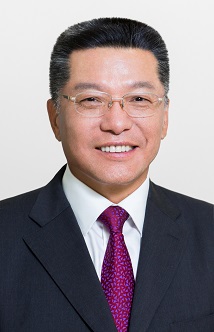
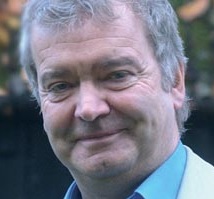
Lord Green was made a life peer in 2010 and served as Minister of State for Trade and Investment from 2011–2013. He has held senior roles in McKinsey & Co Inc, HSBC and HSBC Group. He was Chairman of HSBC from 2006–2010. He now chairs the Natural History Museum as well as a number of other charities.

Venue: University of Edinburgh Business School, 29 Buccleuch Place, EH8 9JS
Time:  6pm-8pm
Booking: to secure your place for this lecture please register via this Eventbrite link.

This talk is part of the 2015 Confucius Institute for Scotland Business Lecture Series and is organised in partnership with the University of Edinburgh’s Busines School.

“Chinese Rules” Tim Clissold 29th Sept 15

The latest book from Tim Clissold “Chinese Rules” intriguingly subtitled ‘Mao’s Dog, Deng’s Cat, and Five Timeless Lessons from the Front Lines in China’ is an attempt to explain how China works.

Join the Confucius Institute for Scotland and the China Britain Business Council at this late afternoon talk in which the author, known by the title of his first book Mr China, will discuss the book,  much of the content of which is drawn from his experience of seeking carbon capture investment opportunities in China when the carbon credit market was booming in the noughties.

From the back cover: “Combining exuberant storytelling, sly humour, and counterintuitive insights, Chinese Rules traces Clissold’s latest adventures, providing an object lesson in the contradictions between reality and conventional belief that continue to make China a fascinating, perplexing, and irresistible destination for Westerners”.

The talk will take place at the Edinburgh Centre for Carbon Innovation, High School Yards, Infirmary Street, Edinburgh EH1 1LZ from 15.30 – 17.00 on Tuesday 29th Sept 2015.

This talk, which is also supported by SDI, should interest anyone engaged with China through their business or research interests. Registration should be made through the following China Britian Business Council link.

Spotlight Taiwan Lecture Series 27th Aug 15.00-17.00

As part of the Spotlight Taiwan programme, Ang Li, one of the most prominent woman writers in Taiwan today will give a lecture on “Sex Food and Politics” on Thursday 27th August 15.00-17.00.

In this lecture, she examines the intertwining of gender, food and politics, which continues to break new ground of literary reflection, creating a new space of questions involving female sexuality and Asian women’s literature in the international literary scene.

Taking place at the University of Edinburgh’s Project Room 1.06, at No 50 George Square booking is required.  To reserve a place please email spotlighttaiwan.edinburgh@gmail.com

Michael Goedius 10 August Contemporary Chinese Art

Michael Goedhuis, a world renowned expert on contemporary Chinese art, will offer his unique perspective on developments in this fascinating field in a evening event taking place in the University of Edinburgh on Monday 10th August with registration from 17.30 for the talk which will start at 18.00. The venue for this event is Lecture Theatre 4 which is easily accessed from 29 Buccleuch Place, EH8 9JS

This talk entitled “The New Chinese Cultural Revolution. Contemporary Chinese Art and Understanding its Potential and Meaning” will be of interest to a broad audience but particularly to those with an interest in Chinese culture and to members of the investment community as Chinese art is currently one of the most successfully performing asset classes.

Michael Goedhuis is a pioneer in the field of modern and contemporary Chinese art, having spent the past 15 years identifying the best and most original artists working today. He will deliver an insightful presentation in Edinburgh on what he describes as China’s true “Cultural Revolution”, not confined to art but manifest in film, music, theatre, design, dance and literature and leading to a rapid expansion of investment in art by a new generation of collectors.

Tickets for this event are charged at £10 for Asia Scotland Institute members and partners and £25 for non-members. Click here to book

To read more about contemporary Chinese art please visit Michael Goedius’s website.

In a Data-Driven World, Good Governance Means Good Data Governance-Chen Liming 14.03

We are honoured to have Chen Liming, Chair of IBM Greater China and Honorary Professor of the University of Edinburgh to open this year’s Business Lecture Series – Belt & Road Initiative.

As developing countries industrialize, they can learn from the experience of other countries and implement high-tech solutions to ensure a more efficient, sustainable, and eco-friendly pathway to improve people’s life and prosperity. Good governance during development therefore not only covers economic and social governance, but also good governance of high-tech, and above all, good governance of data. In a data driven world, data becomes the most valuable asset, but at times also the most vulnerable. Current dependence on data in advanced economies raises the stakes when cybercrime hits, and cyberattacks can spread across geographic borders to impact any country. As developing countries begin to accumulate more data and maximize value from this precious resource, they must be mindful of good governance of their data to protect infrastructure, financial systems, and the digital lives of their citizens.

This talk will take place in the University of Edinburgh Business School. The lecture will start at 6pm and be followed by a Q&A and then networking drinks reception. 

To book your seat please register here – Booking for Chen Liming’s lecture.

Biography

Chen Liming

Chen Liming is a transformational and transboundary business leader with a track record of 30+ years with MNCs across a range of industries and diversified cultures. He has led corporate transformation, business turnaround, performance improvement, and governance enhancement. Mr. Chen is accountable for the overall performance of IBM Greater China Group across multiple business units. Since joining IBM in 2015, he has designed and implemented the ‘IBM Greater China Group Strategy’ and ‘Made with China’ initiatives adapted to the new business era. He has driven process simplification to make the company more client and market centric, and enhanced governance by creating a responsible culture. He has served on many boards of directors, including China Aviation Oil Company (Singapore) and Cornell University China Advisory Board. He was appointed as the Senior International Advisor to the Governor of Shaanxi Province, China in 2017. Mr. Chen obtained his Bachelor’s degree from Xinjiang Shihezi University in 1982 and Master’s degree from Cornell University in 1989. He completed the Advanced Management Program at Harvard Business School (HBS) in 2003 and MCB class at HBS in 2013. He and his family currently live in Beijing.

Free entry. All welcome. Booking is required.

Prof Ban Wang: “Where have all the villages gone?” 4 June

The fourth scholar in our Distinguished Lecture Series is Ban Wang, the William Haas Professor in Chinese Studies and a board member of the Confucius Institute at Stanford University.

Wang Ban

Professor Wang is also the Yangtze River Chair Professor at East China Normal University. In addition to his research on Chinese and comparative literature, he has written on English and French literatures, psychoanalysis, international politics, and cinema.

He received his Ph.D. in comparative literature from the University of California at Los Angeles in 1993. He was a research fellow with the National Endowment for the Humanities and the Institute for Advanced Studies at Princeton University. He taught at Beijing Foreign Studies University, SUNY-Stony Brook, Harvard University, and Rutgers University before he came to Stanford.  He has been a recipient of fellowships and awards from the National Endowment for the Humanities and was also a research fellow with the Institute for Advanced Study at Princeton in 2007.

LECTURE TOPIC

Where Have All The Villages Gone? –
The Life and Death of Rural Culture in Chinese Literature and Film

In China, “home sweet home” would refer to a village rather than a city. This talk shows that the Chinese village, a source of nostalgia and memory, undergoes decline and rebirth in the midst of China’s pursuit of modernization and urbanization. Whether as a retreat or a depository of traditional values, the village home epitomizes a series of responses to uprooting and destruction.Walking through literary scenarios and film clips, Professor Wang will discuss changing stances and sentiment toward village culture and rural landscape. In literature, nostalgia for home is mixed with a rejection of tradition. On the other hand, depictions of the desolate village are tinged with utopian yearnings for the harmonious home of the Peach Blossom Spring.

While Zhang Yimou’s Road Home elevates communal bonds and Confucian values to a sublime height, Postmen in the Mountain (dir. Huo Jianqi) raises concerns about the village caught up between urbanization and the preservation of rural culture.

PUBLICATIONS

His major works include The Sublime Figure of History: Aesthetics and Politics in Twentieth Century China (Stanford UP, 1997) and Illuminations from the Past: Trauma, Memory and History (Stanford, 2004); and History and Memory (Oxford University 2004). He co-edited Trauma and Cinema: Cross-Cultural Explorations (Hong Kong UP, 2004), The Image of China in the American Classroom (Nanjing UP, 2006), China and New Left Visions (Lexington, 2012), and Debating Socialist Legacy and Capitalist Globalization (Palgrave, 2014). He edited Words and Their Stories: Essays on the Languages of the Chinese Revolution (Brill 2012). His edited volume Rethinking Chinese Perceptions of World Order is forthcoming from Duke University Press. He was a recipient of fellowships and awards from the National Endowment for the Humanities and a research fellow with the Institute for Advanced Study at Princeton in 2007.

For further information please visit his page at Stanford University.

Thurs 4 June 5.30pm-7pm
Lecture Theatre 2
University of Edinburgh Business School
29 Buccleuch Place
EH8 9JY

All welcome. No registration required. Networking drinks reception follows


‘Scots in Asia’ – 26 & 27 June Keynote: Sir Tom Devine

This seminar explores the historical and contemporary experiences of Scots in Asia,  with a keynote lecture by Professor Emeritus, Sir Tom Devine and a range of  impressive speakers. 

The keynote lecture from Sir Tom Devine entitled Addicting the Dragon: China, Opium, and Scotland’ will be held in the Meadows Lecture Theatre, William Robertson Wing, Old Medical School, Teviot Place, University of Edinburgh from 5.30pm on Friday 26th .

Tom Devine

Professor Emeritus, Sir Tom Devine graduated from Strathclyde University and hold honorary doctorates from The Queen’s University, Belfast and the University of Abertay, Dundee. At Strathclyde he rose through the academic ranks from assistant lecturer to Professor of Scottish History (in 1988), Dean of the Faculty of Arts and Social Sciences and, finally, Deputy Principal of the University from 1994 to 1998. From 1999 to 2004 he was a member of staff at Aberdeen University, being successively University Research Professor in Scottish History, Director of the AHRC Research Centre in Irish and Scottish Studies and Glucksman Research Chair of Irish and Scottish Studies. He joined Edinburgh University in January 2006. In addition to these appointments in the UK, he hold Honorary Professorships across the Atlantic at North Carolina (USA) and Guelph (Canada). Between 1992 and 1993 he was a British Academy/Leverhulme Trust Senior Research Fellow.

The event Opening on Friday 26th with a keynote lecture at 5.30pm and the remaining talks will take place from 9.45am until 6pm on Saturday 27 June.

The seminar on Saturday 27th June runs from 09.45am till 6pm. The programme features:

  • Dr Tom Barron, independent historian: ‘Scots coffee planters in nineteenth century Ceylon’
  • Dr Tanja Bueltmann, Northumbria University: ‘From ethnic associational-ism to social networking: A longitudinal comparison of formal sociability in Scottish communities in Asia, c.1870 to the present’
  • Professor Emeritus Sir Tom Devine, University of Edinburgh, ‘Addicting the dragon: China, opium, and the Scottish factor’
  •  Ellen Filor, University College London, ‘Death or a Pension: Scots and the End of the East India Company, 1800-1857′
  •  Dr Joanna Frew, University of Essex, ‘Agricultural improvement and order in the Baramahal, South India, 1792-99′
  • Dr Isabella Jackson, University of Aberdeen, ‘The Shanghai Scottish: Scottish, imperial, and local identities in the Scottish Company of the Shanghai Volunteer Corps’
  • Professor Angela McCarthy, University of Otago, ‘James Taylor and cross-cultural encounters in Ceylon’
  • Dr George McGilvary, honorary postdoctoral fellow, Scottish Centre for Diaspora Studies, University of Edinburgh, ‘Commercial exploits of the Scottish elite in India and South-east Asia, 1760-1830, with special reference to David Scott, MP (1746-1805)’
  • Professor Emeritus Patrick Peebles, University of Missouri – Kansas City, ‘Governor James Alexander Stewart Mackenzie and the making of Ceylon’
  • Iain Watson, University of Edinburgh, ‘The right kind of migrants: Scottish expatriates in Hong Kong and South-East Asia since 1950 and the preservation of human capital’.

The lectures will take place at Meadows Lecture Theatre, William Robertson Wing, Old Medical School, Teviot Place, University of Edinburgh EH8 9AG. All are welcome to attend either the Friday or Saturday only sessions or both.  Admission is free but booking is required at:  https://eventbrite.co.uk/event/15925511634/ Please select tickets as appropriate.

The event is sponsored by the ESRC Seminar Series ‘Scotland’s Diasporas in Comparative Perspective’ and the Scottish Centre for Diaspora Studies, University of Edinburgh in partnership with the University of Otago and the University of Hull.

Will China Dominate the 21st Century? 6th May

Join us on Wed 6th May 18.30-20.00 at the University of Edinburgh Business School when Jonathan Fenby will speak about his recent book of the same title, in which he outlines the challenges that China faces during its recent phase of spectacular growth.

Biography

Jonathan Fenby is former deputy editor of The Guardian 1988–1993; editor of The Observer 1993 –1995 and editor of The South China Morning Post 1995-1999.

Jonathan Fenby

He currently runs the China team at Trusted Sources, an emerging markets research and consultancy firm he founded. He is a leading analyst on China with a strong following in the investment community.

Jonathan’s specialist area is policy interpretation, politics and the broader political economy. He is the author of eight books on China. His ‘History of Modern China’ for Penguin Press and Harper Collins was chosen as one of the books of the year for 2008 by The Economist and Financial Times. He broadcasts frequently on CNBC, BBC and Bloomberg, among other broadcast media, and lectures on contemporary China in the UK, US, Europe and East Asia.

SYNOPSIS & Format

China has to deal with political, economic, social and international tests, each of which involves structural difficulties that will put the system under strain. Based on the speaker’s extensive knowledge of contemporary China, this event will offer a pragmatic view of where the People’s Republic of China is heading at a time when its future is too important an issue for wishful theorizing.

Jonathan’s talk will be followed by a panel discussion chaired by Professor Richard Harrison, who is the China lead for the Business School looking at strategic partnership development. They will be joined by University of Edinburgh’s Professor Matthias Zachmann, who specialises in East Asian International relations.

This is a joint event with the Asia Scotland Institute.  Registration is required.

18.00: Registration
18.30-20.00:  Lecture
20.00:  Drinks Reception

Venue: Auditorium, University of Edinburgh Business School, 29 Buccleuch Place, EH8 9JS

‘Magical Metropolises’ 30 March: Chris Berry, King’s College

A special guest lecture will take place from 5.30pm on Mon 30 March when Chris Berry, Professor of Film Studies at King’s College London and a world-leading scholar on Chinese and East Asian cinema will visit and give a lecture entitled “Cao Fei’s ‘Magical Metropolises’ : Chinese Video Art and the City”.

Magical Metropolises

The urban sprawl of the Pearl River Delta inspired star architect Rem Koolhaas’s writings on the ‘generic city’, which he celebrates precisely for its blandness. Cao Fei herself is from Guangzhou. Yet, in works like RMB City, Haze and Fog, Whose Utopia and Hip Hop Guangzhou, Cao Fei creates what she calls ‘magical metropolises’. What kind of responses are Cao’s ‘magical’ works to contemporary Chinese urbanisation? This talk proposes four hermeneutic frameworks to analyse the works themselves:

  • heterotopic imaginations that encourage viewers to crystallize the city’s woes and at the same time hope for its future;
  • participatory art, enlisting the subjects of the artwork as collaborators to rehearse alternative urban possibilities;
  • the use of dance and rhythm to re-enchant these disenchanted spaces and make them magical;
  • gestural cinema understood as itself an ethical as well as aesthetic practice, in so far as it calls upon collaborators and audiences to imagine a transformed Chinese city.

Taken together, these frameworks demonstrate that Cao’s work does not only reflect current Chinese urban condition, but also participates and intervenes in it.

Biography

Professor Berry’s research fields include Chinese and East Asian cinema and screen cultures; gender, sexuality and cinema; documentary film; and theories of national and transnational cinema. He has held several international visiting professorships and published several widely influential books on Chinese cinema culture.

Zhang Longxi Distinguished Lecture 28 April

The third distinguished scholar in our 2015 lecture series on China will be Professor Zhang Longxi, currently Chair Professor of Comparative Literature and Translation at City University of Hong Kong.

Zhang LongxiZHANG Longxi is a leading scholar in East-West cross-cultural studies. He holds an MA from Peking University and a Ph.D. from Harvard. He has taught at Harvard and the University of California, Riverside and is an elected foreign member of the Royal Swedish Academy of Letters, History and Antiquities, a foreign member of Academia Europaea, a member of the Executive Council of the International Comparative Literature Association, and an Advisory Editor of New Literary History.
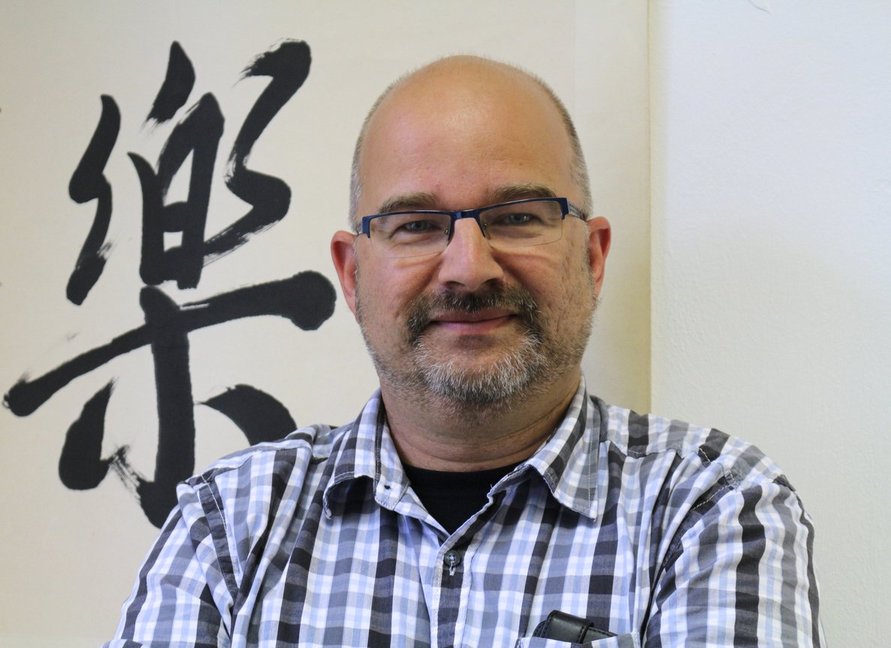
His talk entitled Re-conceptualizing China in our Time:From a Chinese Perspective will take place on Tuesday 28 April from 17.30 in the first floor Project Room 1.06, 50 George Square, EH8 9JY.

Abstract

China, as a concept, has not been put under much scrutiny and challenge until the recent post-modern and post-colonial theoretical discourse on nation and nationhood, and the radical scepticism about tradition and homogeneity. Some scholars have questioned whether China could have been a nation state before there was any nation state in Europe, and others have challenged the very notions of China and Chinese-ness.

How do the Chinese themselves respond to such scepticism and challenge? How does one re-conceptualize China at the present time? By drawing on recent debates on such important issues, this lecture tries to find some answers and offers some views from a Chinese perspective, while fully engaging Western theoretical discourses to attempt at an international dialogue and meaningful exchange.

Major publications

His major book publications include The Tao and the Logos: Literary Hermeneutics, East and West (Durham: Duke University Press, 1992); Mighty Opposites: From Dichotomies to Differences in the Comparative Study of China (Stanford: Stanford University Press, 1998); Out of the Cultural Ghetto (Hong Kong: Commercial Press, 2000; Beijing: Joint Publishing Co., 2004, in Chinese); Allegoresis: Reading Canonical Literature East and West (Ithaca: Cornell University Press, 2005); Unexpected Affinities: Reading across Cultures (Toronto: University of Toronto Press, 2007); An Introduction to Comparative Literature (Shanghai: Fudan University Press, 2009, in Chinese); A Spiritual Epic: Paradise Lost (Taipei: Net and Books, 2010, in Chinese); A Collection of Thirty Essays (Shanghai: Fudan University Press, 2011, in Chinese); Hermeneutics and Cross-Cultural Studies (Shanghai: Fudan University Press, 2014, in Chinese); and most recently, From Comparison to World Literature (Albany: SUNY Press, 2015).

Chinese Language Teaching in Germany 3 March

Dr Andreas Guder based in Freie Universität, Berlin where he is the Head of Chinese Language Study, is making a short visit to Edinburgh. Andreas also holds the post of Chairman of the Association of Chinese Teachers in German Speaking Countries (FaCh).

Andreas Guder

His talk is entitled “Chinese as a Foreign Language in Germany: Institutions, Activities and Perspectives of the German Chinese Language Teachers Association”. He will focus on four main topics.

  1. Chinese as a Foreign Language in Germany
  2. Association of Chinese Teachers in German Speaking Countries (FaCh)
  3. Common European Framework of Reference (CEFR) and HSK
  4. European Benchmarks for the Chinese Language Project

This talk will take place on Tuesday 3 March running 5.30pm-7pm in the University of Edinburgh Business School, Lecture Theatre 3, 29 Buccleuch Place, EH8 9JS.  Following on from the lecture and Q&A there will be a networking drinks reception.