
Introduction
A Warm Welcome
as you join us for a truly remarkable programme of cutting-edge independent documentary filmmaking in China including screenings of films rarely shown; discussions with the directors after each session; and a one day event of screenings, keynote lecture and a round table discussion with the film directors and international experts on Chinese documentaries.
Natascha Gentz, Director of the Confucius Institute for Scotland
Wu Wenguang is not only the acknowledged ‘founder’ of Chinese independent documentary, producing internationally acclaimed “unofficial” films in China since the late 1980s, but is also an oral historian. His early films captured aspects of contemporary life rarely seen on mainstream television. In recent years, Wu and many other documentarians have turned to oral history. What are the events that these oral history films remember? What is the significance of remembering them? In the Folk Memory Project, Wu and his colleagues focus on the man-made famine of the early 1960s. Almost all the memories recorded in the oral history films of the Chinese independent documentary movement are those the state encourages everyone to forget. This event considers Wu’s oral history achievements in the light of debates about official memory and popular memory, as well as memory, forgetting, and the constitution of national identity.
The Directors
Wu Wenguang
Was born in Yunnan Province in 1956. After graduating from high school in 1974, Wu was sent to the countryside, to work as a farmer for four years. Graduating in Chinese Literature from Yunnan University in 1982, he worked as a middle school teacher, and then TV journalist. Wu started his career as an independent documentary filmmaker in 1988 in Beijing, producing many influential and acclaimed documentaries. In 2005, Wu co-founded (with Wen Hui) an independent art studio in Beijing, the Caochangdi Workstation.
Zou Xueping
Who was born in 1985, graduated from the China Fine Arts Academy in 2009. She is currently a resident artist at the Caochangdi Workstation. She has made several documentaries one of which won the ‘Excellent Award’ at the Beijing Independent Film Festival 2012.
Zhang Mengqi
Was born in 1987. She graduated from the Dance Academy of China Minorities University in 2008. Since 2009, she has been a resident artist at Caochangdi Workstation. She has produced four documentary films, which constitute a ‘Self-Portrait Series.’
Chris Berry (Keynote lecture)
Is Professor of Film Studies at King’s College London and a world-leading scholar on Chinese and East Asian cinema. His research fields include Chinese and East Asian cinema and screen cultures; gender, sexuality and cinema; documentary film; and theories of national and transnational cinema. He has held several international visiting professorships and published several widely influential books on Chinese cinema culture.
1: I Want to Be a People’s Representative
我要当人民代表 (Jia Zhitan, 2013, 78 min)
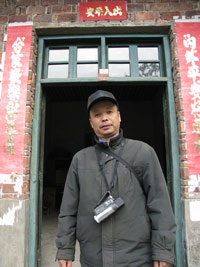 I am a peasant. I participated in the Village Documentary Project and I have been making documentary films for eight years. In 2012, the People’s Congress in my county initiated an election that would take place once every four years. I thought I was a person who kept speaking for the people in my village and solving their problems, and I believed myself eligible to be a People’s Representative. So I took part in the election and hoped that I could do better for the villagers. The outcome was expected. I recorded with my camera the process of fighting for the legitimate rights and interests of citizens.
2: Satiated Village 吃饱的村子
(Zou Xueping, 2011, 88 min)
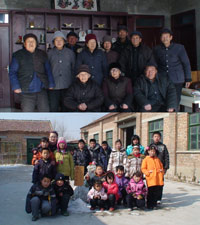 After completing my first documentary film, The Hungry Village, I returned to my hometown and showed the film to my family. My family members (including my 1950s born parents, 1970s born elder brother, and 1990s born younger brother) expressed strong opposition because they worried that making a documentary about the Great Famine could be dangerous. Fortunately, I had a steadfast supporter standing with me—my nine-year-old niece. Some old people I had interviewed also firmly supported me. The villagers who experienced the tragic famine fifty years ago are not short of food now, but are their souls still starving?
3: Children’s Village 孩子的村子
(Zou Xueping, 2012, 85 min)
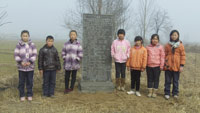
This is my third documentary film about the same village that I considered in the Folk Memory Project. In 2012, I conducted interviews and also began to collect data about death rates during the Three Year Famine. I started soliciting donations in order to build a memorial to famine victims. Some 10-15 year old children volunteered to work for my project. I gave them camera and they interviewed old folks, collected data and donations. This project provided them with the first opportunity to learn about the history of their own village. With the help from these ‘little angels,’ I no longer felt lonely in the village. I saw the hope of the future.
4: Self-Portrait with Three Women 自画像和三个女人
(Zhang Mengqi, 2010, 70 min)
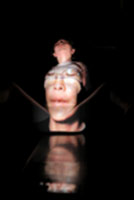 This year I turned 23, the age when women become pregnant with dreams. Yet, while nursing our own dreams, we carry the burdens of two other women’s dreams as well. This film begins with my own soul-searching, and then looks into my mother’s and her mother’s dreams. Although the same blood runs in the bodies of the three women, they grew up in extremely different times. As a victim of an arranged marriage, my grandmother hoped that my mother could have a beautiful and perfect marriage. When my mother turned out to be a victim herself, she passed those hopes on to me. A satisfactory marriage may be a dream of every girl, but it can also be the murderer of those dreams.
5: Treatment 治疗
(Wu Wenguang, 2010, 80 min)
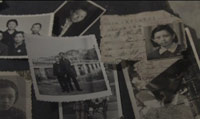 This film started with my idea to make a film in memory of my mother, who passed away in 2007. But my thoughts kept breaking and shifting when I combed through the footage that I had filmed over a twelve-year period. I saw the subtleties I had previously over-looked and I felt as if I was reliving those days that were gone. Even more stimulating were the moments when I faced the moving images of my mother. Seeing that someone so dear to me who had already left this world was captured in such a vivid way, I felt as if it all happened yesterday. Then I realized that this film was not only about remembering her; it was also an experiment to bring her back to life. Especially at a time of self-healing, my mother was a crucial element. Therefore, through my mother/ remembrance/ the present/ healing and self-healing, this film’s structure and narrative began to materialize naturally.
6: Self-Portrait: At 47KM 自画像:47公里
(Zhang Mengqi, 2011, 77 min)
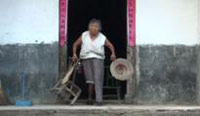 This film was shot in a village named ‘47 KM,’ where my father was born, located 47 kilometres from the city of Suzhou. My father left the village when he was 20, but my grandfather still lives there. Because of my involvement in the Folk Memory Project I went back there in 2010. Through this experience I re-discovered and could better understand my grandfather, who suffered during the Three Year Famine fifty years ago. The village had always perplexed and embarrassed me. What does ‘47 KM’ really mean to me? It seems like a mirror in which I see myself.
Schedule
Tues 25 Nov: 6:00-7:45pm Opening Session
50 George Square, 1.06 Project Room
Introduction (Natascha Gentz, Wu Wenguang)
I Want to Be a People’s Representative
(Jia Zhitan, 2013, 78 min)
Drinks Reception
Wed 26 Nov: 3:00-5:00pm Screening
50 George Square, G.04 Screening Room
Satiated Village (Zou Xueping, 2011, 88 min)
Thurs 27 Nov: 6:30-8:30pm Screening
50 George Square, G.04 Screening Room
Children’s Village (Zou Xueping, 2012, 85 min)
Fri 28 Nov: 4:15-6:15pm & 6:30-8:30pm Screenings
David Hume Tower, Faculty Room South, George Sq.
4.15pm: Self-Portrait with Three Women
(Zhang Mengqi, 2010, 70 min)
6.30pm: Treatment (Wu Wenguang, 2010, 80 min)
Sat Nov 29: All Day
50 George Square, 1.06 Project Room
11:00-1:00pm Self-Portrait: At 47KM
(Zhang Mengqi, 2011, 77min)(Zhang Mengqi, 2011, 77 min)
2:00-3:15pm Chris Berry (Keynote lecture):
“Wu Wenguang and the Folk Memory Project: What is in the Alternative Archive of Chinese Independent Documentary?”
3:30-5:00pm Roundtable Discussion chaired by Paul Pickowicz (UCSD)
with Wu Wenguang, Zhang Mengqi, Zou Xueping, Chris Berry, Julian Ward and Huang Xuelei